

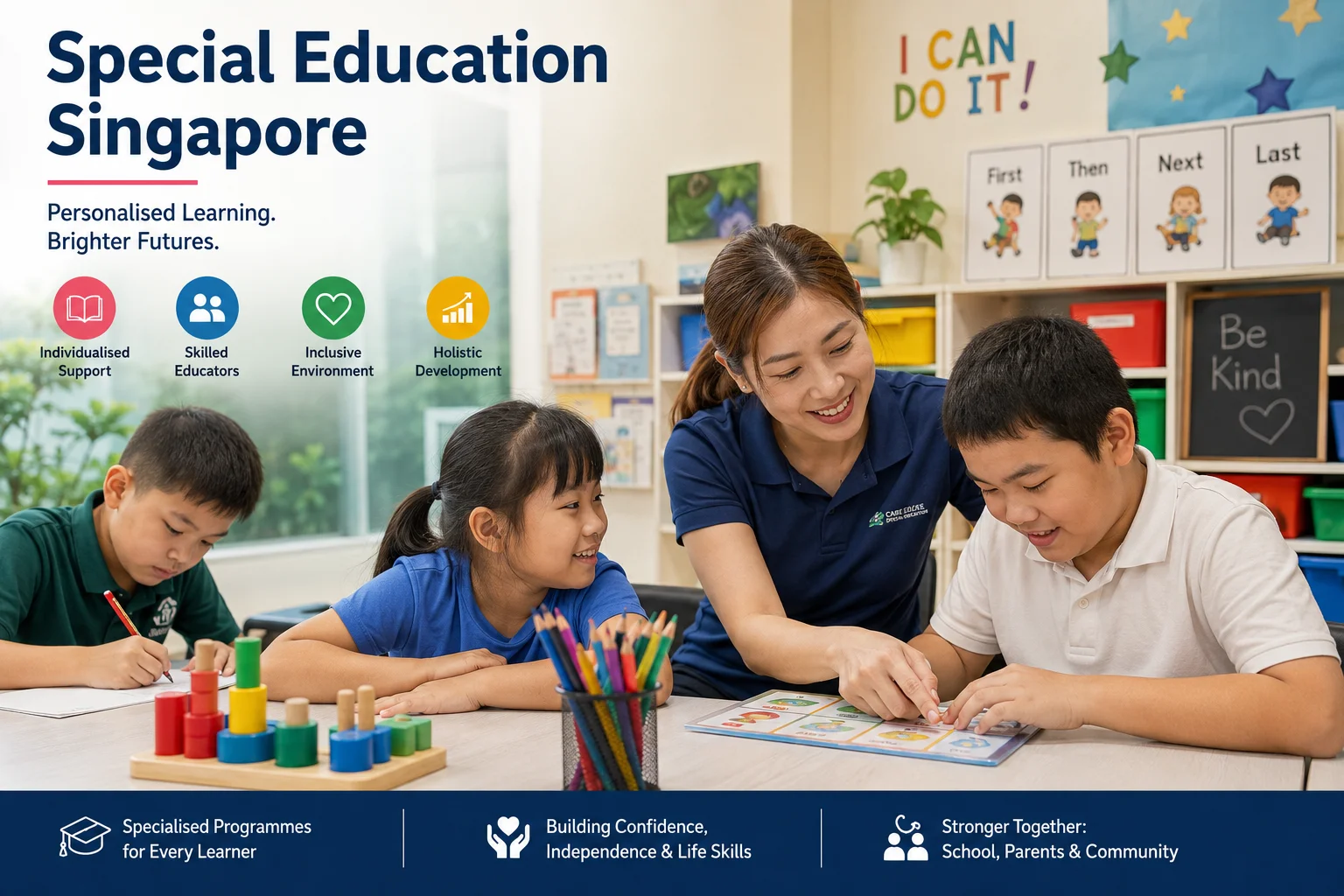
Every child learns differently. Some children need extra time. Others benefit from smaller classes, specialised teaching methods, or additional learning support. That’s exactly where Special Education Singapore plays an important role.
Singapore has built a strong education system that doesn’t only focus on academic excellence—it also provides meaningful support for children with diverse learning needs. Families today have more resources, better-trained educators, and wider access to specialised programmes than ever before.
Still… many parents feel overwhelmed at the beginning.
Which school should you choose? What support is available? How do assessments work? And what happens after primary school?
This guide answers those questions in simple words.
What is Special Education Singapore?
Special Education Singapore refers to specialised educational programmes created for children and young people who have disabilities or additional learning needs that require more personalised teaching.
These programmes help students develop:
- Academic skills
- Communication abilities
- Daily living skills
- Social interaction
- Emotional confidence
- Independent living skills
- Vocational readiness
Instead of using one teaching method for every child, educators adapt lessons according to each student’s strengths and challenges.
That flexibility makes a huge difference.
Who Can Benefit from Special Education Singapore?
Children with different developmental or learning needs may qualify for Special Education Singapore programmes.
Some common conditions include:
| Learning Need | Typical Support Provided |
|---|---|
| Autism Spectrum Disorder (ASD) | Structured learning, communication support |
| Intellectual Disability | Individualised learning plans |
| Hearing Impairment | Special communication methods |
| Visual Impairment | Accessible learning materials |
| Physical Disabilities | Adaptive classrooms and equipment |
| Multiple Disabilities | Multi-disciplinary educational support |
| Developmental Delay | Early intervention and specialised teaching |
Every child is assessed individually because no two learners are exactly the same.
How Students Enter Special Education Singapore
Parents usually begin with a professional assessment.
Depending on the child’s needs, recommendations may come from:
- Developmental paediatricians
- Child psychologists
- Educational psychologists
- Therapists
- Early intervention professionals
The assessment helps determine which Special Education Singapore pathway is most suitable.
Sometimes children remain in mainstream schools with additional support.
Other children benefit more from specialised educational settings.
Neither option is “better”—the goal is simply finding the best fit.
Different Types of Special Education Support
Singapore offers several support options depending on a student’s needs.
1. Mainstream Schools with Learning Support
Some students study in mainstream classrooms while receiving additional assistance.
Support may include:
- Learning support teachers
- Classroom adjustments
- Therapy services
- Individual learning plans
- Counselling
Many children thrive with this balanced approach.
2. Special Education Schools
Students requiring more intensive support may attend dedicated schools designed specifically for specialised learning.
These schools typically offer:
- Smaller class sizes
- Individual attention
- Structured routines
- Therapy integration
- Practical life skills training
This environment allows teachers to focus closely on each learner’s progress.
3. Early Intervention Programmes
Early support often leads to better long-term outcomes.
Many families begin with early intervention before formal schooling starts.
Children can develop:
- Language skills
- Motor skills
- Social confidence
- Emotional regulation
- Basic learning abilities
Early intervention is an important part of the wider Special Education Singapore system.
Key Features of Special Education Singapore
Every programme may differ, but most include several important features.
| Feature | Benefit |
| Small Class Sizes | More personalised teaching |
| Individual Learning Plans | Lessons tailored to each child |
| Therapy Support | Speech, occupational and physical therapy |
| Life Skills Training | Builds independence |
| Vocational Education | Prepares students for employment |
| Parent Collaboration | Strong home-school partnership |
These elements work together to help students reach their full potential.
Subjects Taught in Special Education Singapore
Academic learning remains important.
But education extends beyond textbooks.
Students may learn:
- English
- Mathematics
- Functional literacy
- Communication skills
- Digital literacy
- Personal hygiene
- Independent living
- Financial awareness
- Social interaction
- Community participation
Many schools also include creative arts, music, sports, and vocational activities.
The goal isn’t simply examination success.
It’s preparing students for everyday life.
Why Parents Appreciate Special Education Singapore
Many parents notice positive changes after finding the right educational environment.
Some common benefits include:
- Increased confidence
- Better communication
- Improved behaviour
- Higher independence
- Better emotional regulation
- Stronger friendships
- Practical life skills
- Personal growth
Progress sometimes happens slowly.
And that’s perfectly normal.
Every small achievement matters.
How Parents Can Support Their Child
Education doesn’t stop when school ends.
Families play a major role in helping children continue learning.
Here are a few practical ideas:
- Maintain consistent daily routines.
- Celebrate small achievements.
- Communicate regularly with teachers.
- Encourage independence whenever possible.
- Practise classroom skills at home.
- Be patient during difficult periods.
- Focus on strengths rather than weaknesses.
The partnership between home and school is one of the biggest reasons Special Education Singapore works so well.
Preparing for the Future
As students grow older, planning for adulthood becomes increasingly important.
Many schools introduce vocational learning that helps students prepare for employment and independent living.
This may include:
- Workplace training
- Job preparation
- Community participation
- Travel training
- Financial management
- Social communication
- Daily living routines
These practical experiences help students become more confident beyond the classroom.
Common Challenges Parents Face
Starting the journey isn’t always easy.
Parents often worry about:
- Choosing the right school
- Understanding assessments
- Supporting learning at home
- Managing therapy schedules
- Planning long-term education
These concerns are completely understandable.
The good news is that Singapore has developed a wide network of educational and community support services to help families along the way.
Taking one step at a time often makes the process much less overwhelming.
Tips Before Choosing a School
Before selecting any Special Education Singapore programme, consider:
- Your child’s learning style
- Available support services
- Teacher experience
- Student-to-teacher ratio
- Therapy availability
- Future transition planning
- Communication with parents
- School environment
Visiting schools and asking questions can help families make informed decisions.
Final Thoughts
Special Education Singapore continues to evolve, giving children with different learning needs more opportunities to succeed both academically and personally.
Every learner deserves an education that matches their abilities—not one that forces them into a single standard.
Some students progress quickly.
Others take a little more time.
Both journeys are valuable.
With supportive teachers, involved parents, specialised programmes, and the right learning environment, children can build confidence, independence, meaningful relationships, and practical skills that prepare them for life beyond school.
Choosing the right Special Education Singapore pathway isn’t about finding the perfect school.
It’s about finding the place where your child feels understood, supported, and encouraged to grow every single day.
What is Special Education Singapore?
Special Education Singapore provides specialised educational programmes for children with disabilities or additional learning needs through personalised teaching and support services.
Who can enrol in Special Education Singapore?
Children with autism, intellectual disabilities, hearing impairment, visual impairment, physical disabilities, developmental delays, and other additional learning needs may qualify after professional assessment.
Are there different types of Special Education Singapore programmes?
Yes. Students may attend mainstream schools with learning support, specialised schools, or early intervention programmes depending on their educational needs.
Does Special Education Singapore include therapy?
Many programmes integrate speech therapy, occupational therapy, physiotherapy, and other specialised support services into students’ learning plans.
How do parents choose the right Special Education Singapore programme?
Parents should consider professional assessments, teaching methods, class sizes, therapy support, school environment, and long-term educational goals before making a decision.

