

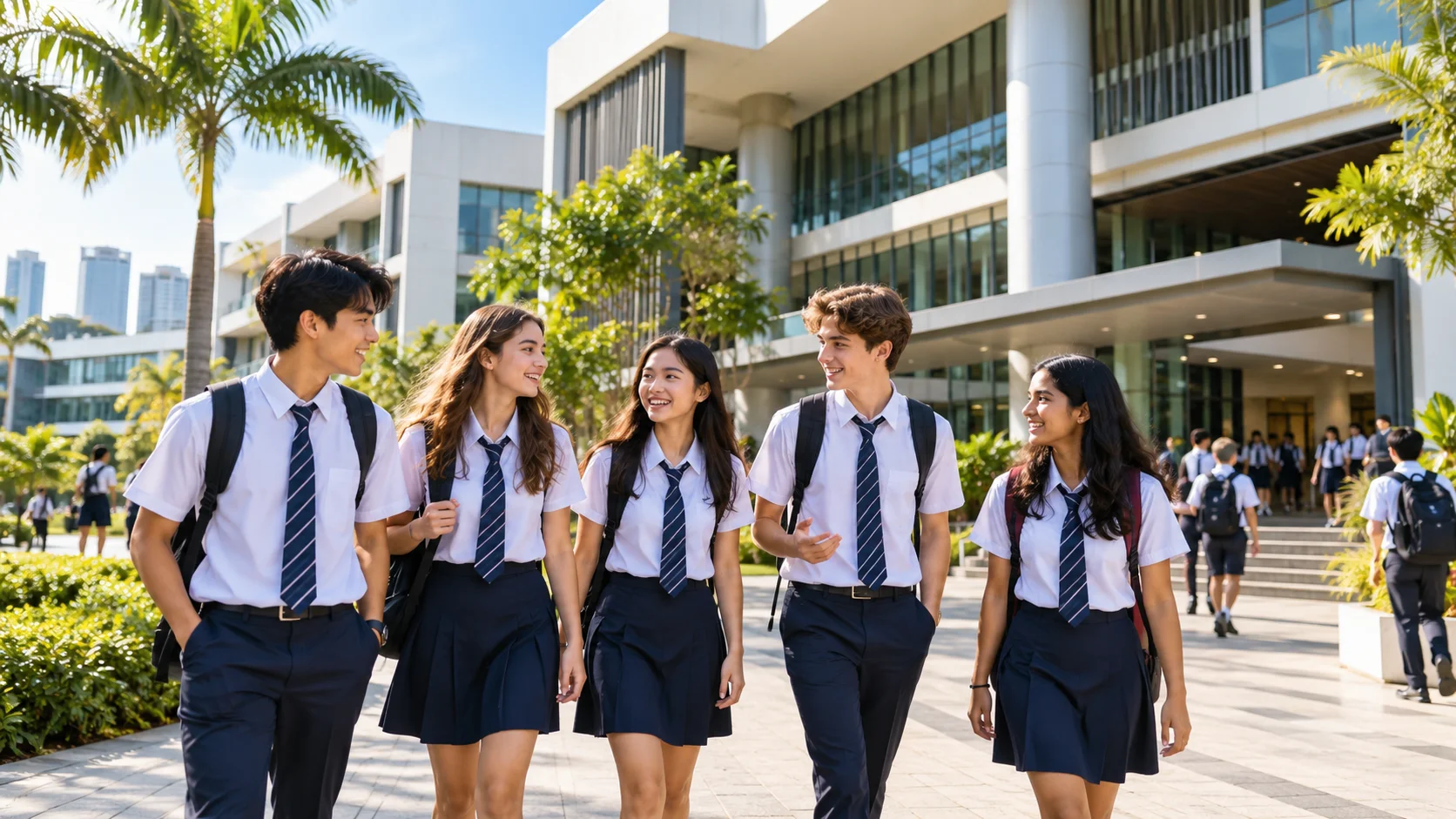
Choosing the right school is an important decision for every family. For parents exploring private schools Singapore, there are many factors to compare, including curriculum, fees, location, admission requirements and teaching style.
Singapore has several education pathways. Students can attend government schools, independent schools, privately funded schools or international schools depending on their eligibility and educational needs.
Private education can be particularly attractive to families looking for international curricula or a different learning environment. However, the right choice depends on the individual student rather than simply the reputation of a school.
What Are Private Schools in Singapore?
The term private schools in Singapore can refer to different types of educational institutions.
Some schools provide secondary and pre-university education outside the mainstream government-school system. Singapore also has international schools offering internationally recognised curricula.
Private Education Institutions (PEIs) are another category. These institutions can provide diploma, preparatory, professional and higher-education programmes.
Parents should therefore check exactly what type of institution they are considering before applying.
Types of Private Schools in Singapore
There is no single type of private school. Families can find different options depending on the student’s age and preferred education pathway.
Privately Funded Schools
Privately funded schools provide alternative education options for eligible students in Singapore.
These schools may have their own curriculum, admission procedures and entrance requirements.
Parents interested in this pathway should contact individual schools directly because requirements and available places can vary.
International Schools
International schools make up a major part of Singapore’s alternative education landscape.
Students may study the International Baccalaureate, Cambridge IGCSE, British, American, Australian or another international curriculum.
These schools are particularly popular with expatriate families who may relocate to another country in the future.
Private Education Institutions
Private Education Institutions provide programmes outside the mainstream school system.
Depending on the institution, programmes may include preparatory courses, certificates, diplomas, professional qualifications or degree pathways.
Parents and students should always check the exact qualification awarded and its recognition before enrolling.
Private Schools vs Government Schools Singapore
Private and government schools operate differently, so comparing them can help parents decide which environment suits their child.
| Factor | Private Schools | Government Schools |
|---|---|---|
| Curriculum | Varies by institution | Singapore national curriculum |
| Fees | Generally higher | Generally lower, especially for citizens |
| Admission | School-specific | Relevant MOE admission processes |
| Student Community | Often internationally diverse | Primarily local with some international students |
| Academic Calendar | Can vary by school | Singapore school calendar |
| Qualifications | Depends on programme | Singapore education pathways |
| Teaching Approach | Varies considerably | Structured around national curriculum |
Neither system is automatically better.
Government schools can provide a strong local education pathway, while private schools may offer curriculum choices that better suit particular students or internationally mobile families.
Curricula Available at Private Schools Singapore
Curriculum should be one of the first things parents compare.
Different curricula use different teaching, assessment and examination methods. They can also lead to different pre-university and university pathways.
International Baccalaureate
The International Baccalaureate is available at various schools in Singapore.
IB programmes encourage students to develop research, communication and critical-thinking skills alongside traditional academic knowledge.
For older students, the IB Diploma Programme can provide a pathway toward universities in Singapore and overseas.
Cambridge IGCSE
Cambridge IGCSE is another widely recognised international qualification.
Students normally choose several subjects and complete assessments or examinations during the programme.
After IGCSE, students can progress to A Levels, IB or other suitable pre-university programmes.
British Curriculum
British-style education is available at several international schools.
It can be particularly useful for families moving from the UK or another country where their child has already studied under a similar system.
Continuing the same curriculum can reduce disruption when moving between countries.
American Curriculum
Some private and international schools provide an American-style education.


Students may earn credits throughout high school and eventually complete a high school diploma.
This system may suit families considering university education in the United States, although students can also apply to universities elsewhere.
How Much Do Private Schools in Singapore Cost?
There is no standard fee for all private schools Singapore families consider.
Fees depend on the school, student’s grade, curriculum and services included.
Parents should not calculate their education budget using tuition fees alone.
| Expense | What Parents Should Check |
|---|---|
| Tuition | Annual or term-based school fees |
| Application Fee | Usually paid during application |
| Registration Fee | May apply after admission |
| School Transport | Depends on distance and route |
| Uniform | Initial purchase and replacements |
| Books & Devices | Textbooks, laptops or tablets |
| Activities | Sports, clubs, trips and programmes |
| Examination Fees | May be charged separately |
| Meals | Daily meals or school meal plans |
A school that initially appears affordable may become considerably more expensive once additional charges are included.
Parents should request the latest official fee schedule before accepting a place.
Admission Requirements for Private Schools
Admissions are generally managed by individual schools.
Students may need to provide previous academic reports, identification documents and other supporting information.
Some schools conduct entrance assessments in English, Mathematics or other subjects.
An interview may also be required.
For international students, additional documentation may be necessary depending on immigration and Student’s Pass requirements.
Applying early can be useful because places in particular grades may be limited.
How to Choose the Best Private School in Singapore
Finding the best private school in Singapore is not simply about choosing the most famous institution.
Parents should look at how well the school fits their child’s needs.
Check the Curriculum
Start with the academic programme.
Parents should consider where their child previously studied and where they are likely to study in the future.
Changing curricula repeatedly can make transitions more difficult, particularly for older students.
Consider School Location
Location can have a major effect on everyday school life.
Even within Singapore, a long daily commute can reduce the time available for homework, rest and extracurricular activities.
Parents should check the actual travel time during morning and afternoon peak periods.
Check Class Sizes
Ask how many students are normally placed in each classroom.
Smaller classes may give teachers more opportunities to provide individual attention, although teaching quality remains more important than numbers alone.
Look at Academic Support
Students have different academic strengths.
Check whether the school provides additional academic help, learning support, language assistance or counselling when needed.
This can be particularly important for students moving from another education system.
Explore Extracurricular Activities
School life should not be limited to classroom learning.
Sports, music, arts, technology, clubs and leadership activities can help students discover new interests and develop social skills.
Check which activities are included in school fees and which require additional payment.
Private Schools for International Students
Singapore attracts students and families from many countries.
This has created a diverse education environment with schools offering several internationally recognised curricula.
For a student arriving from overseas, curriculum continuity can be valuable.
A child who has already spent several years studying IB or a British curriculum may find it easier to continue within the same system.
International families should also check immigration requirements before enrolment.
If English is not the student’s first language, parents should ask whether additional English-language support is available.
Private Schools for Singapore Citizens
Singapore citizens can also consider certain private education pathways, but the rules may differ according to age and programme.
This is particularly important at primary-school level.
Primary education is compulsory for Singapore Citizen children residing in Singapore, subject to applicable requirements and exemptions.
Parents considering an alternative primary-school pathway should check the latest Ministry of Education requirements before making a decision.
For older students, additional private and internationally oriented pathways may become available depending on admission requirements.
What to Check During a School Visit
A school visit gives parents an opportunity to see beyond online photographs and promotional material.
Observe the classrooms, common spaces and overall learning environment.
Ask how teachers communicate with parents and how often student progress is formally reviewed.
It is also worth asking about teacher qualifications and staff turnover.
For students approaching university age, parents should ask about university counselling, subject selection and application support.
These details can be more useful than simply looking at facilities.
Benefits of Private Schools in Singapore
Curriculum choice is one of the biggest potential benefits.
Families may choose an education system that matches their child’s previous studies or future plans.
Some schools also provide smaller learning communities or specialised academic programmes.
International schools can expose students to classmates from different cultural backgrounds.
Extracurricular programmes may include sports, performing arts, technology, community projects and leadership opportunities.
However, benefits vary between schools, so parents should compare individual institutions carefully.
Things to Consider Before Choosing a Private School
Budget should be considered over several years rather than one academic term.
Parents should determine whether tuition and other expenses will remain manageable throughout the child’s expected time at the school.
Academic progression is another important factor.
Parents of older students should understand what qualification their child will receive and how it supports future university applications.
Location also deserves serious consideration.
A good school that requires an exhausting daily journey may not be the best practical option.
Finally, consider the student’s personality.
Some children enjoy large international communities, while others may perform better in smaller and more structured environments.
Are Private Schools Better Than Public Schools?
Private education should not automatically be viewed as better than public education.
Singapore’s government-school system offers a structured national education pathway and remains an appropriate choice for many students.
Private schools provide alternatives.
Their biggest advantage may be the ability to choose a curriculum or learning environment that matches a family’s circumstances.
For an expatriate family living in Singapore temporarily, maintaining an international curriculum may make sense.
A Singaporean family planning to remain locally may have different priorities.
The right decision depends on the child and the family’s long-term plans.
Common Mistakes When Choosing a Private School
One common mistake is choosing a school entirely because of reputation.
A well-known school may still not suit every student’s learning style.
Another mistake is looking only at the advertised tuition fee.
Registration, transport, activities, technology and examination charges can increase the actual annual cost.
Parents should also avoid assuming that every international qualification is identical.
Check how the programme works and what opportunities it provides after graduation.
Waiting too long to apply can also create problems because popular grades may have limited availability.
Making the Final Decision
Start by creating a shortlist of schools that offer the appropriate curriculum.
Then compare fees, location, admission requirements, student support and extracurricular opportunities.
Visit shortlisted schools whenever possible.
Speak directly with admission teams and ask questions about teaching, assessment and progression.
Older students should also be involved in the decision because the school environment will directly affect their academic experience.
The right private schools Singapore option does not have to be the most expensive or prestigious.
A suitable school is one that provides the curriculum, environment and support the individual student needs while remaining practical for the family.
Frequently Asked Questions About Private Schools Singapore
1. How much do private schools cost in Singapore?
Fees vary according to the school, grade and curriculum. Parents should check current tuition and additional charges directly with each school.
2. Are private schools in Singapore good?
Many offer recognised curricula and strong academic programmes, but quality varies. Parents should compare individual schools before choosing.
3. Can foreigners attend private schools in Singapore?
Yes. Many private and international schools accept foreign students subject to admission and applicable immigration requirements.
4. What curriculum do private schools in Singapore follow?
Curricula can include IB, Cambridge IGCSE, British, American and other international education systems.
5. Are private schools better than government schools?
Not necessarily. The better option depends on the student’s learning needs, curriculum preference, budget and future plans.
6. How do I choose the best private school in Singapore?
Compare curriculum, fees, location, class size, academic support, activities and admission requirements before deciding.
7. Do private schools in Singapore accept Singapore citizens?
Some do, depending on the programme and eligibility. Families should check school requirements and relevant MOE rules, particularly for primary education.
Final Thoughts
Choosing among private schools Singapore offers is easier when parents focus on what genuinely suits their child. Curriculum, school fees, location, teaching approach and future study plans should all be considered before making a decision.
Take time to compare schools, visit campuses and speak with admission teams. The right private school should provide a comfortable learning environment, appropriate academic support and a clear pathway for the student’s next stage of education.

