

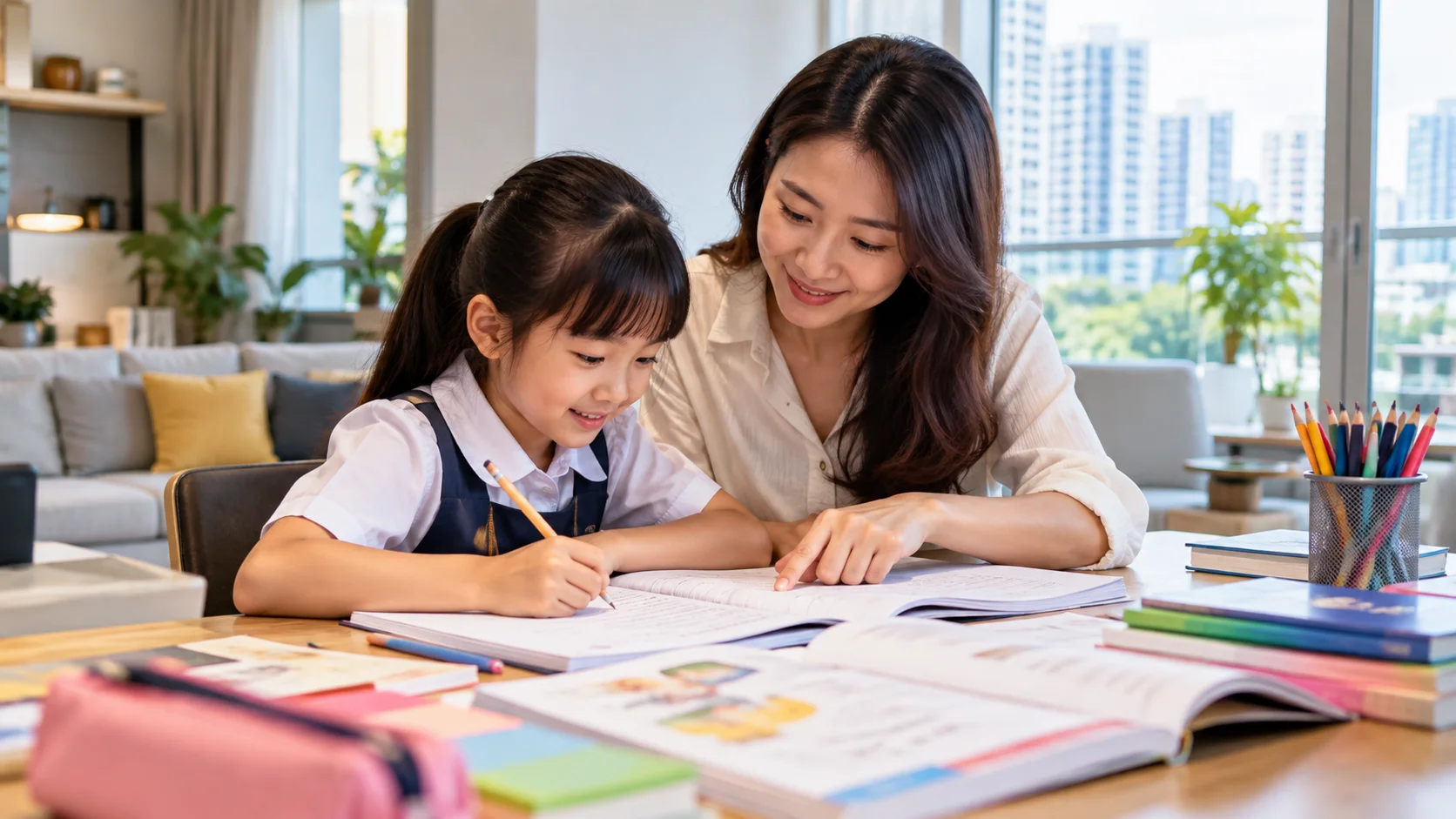
Primary school education in Singapore plays an important role in building a child’s academic foundation, communication skills, confidence, and everyday learning habits. For many parents, entering primary school is also the first time they need to understand a more structured education system, from choosing a school to following subject requirements and preparing for later stages of education.
Singapore’s primary education system generally focuses on giving children a strong foundation in languages, mathematics, science, character development, physical education, and social skills. At the same time, schools provide opportunities for children to discover interests outside traditional classroom subjects.
This guide explains how primary school education in Singapore works, what children learn, how the different stages are structured, and what parents should consider during the primary school years.
How Primary School Education in Singapore Works
Primary education in Singapore normally lasts six years. Students progress from Primary 1 to Primary 6, with their learning becoming gradually more advanced as they move through each level.
The primary school journey can broadly be viewed in two stages.
Primary 1 to Primary 4 focuses heavily on building core skills. Children develop their ability to read, write, communicate, calculate, solve problems, and understand basic concepts across different subjects.
Primary 5 and Primary 6 introduce more advanced subject content and prepare students for the transition to secondary education.
The purpose of these six years is not limited to examination preparation. Schools also work on developing independence, teamwork, responsibility, creativity, communication, and positive learning habits.
Primary School Education Singapore at a Glance
| Area | General Information |
|---|---|
| Typical duration | 6 years |
| Levels | Primary 1 to Primary 6 |
| Starting age | Usually around 6–7 years old |
| Core subjects | English, Mother Tongue Language, Mathematics and Science |
| Science | Commonly introduced from Primary 3 |
| Other learning areas | Art, Music, Physical Education, Social Studies and Character & Citizenship Education |
| School year | Generally divided into four terms |
| Final primary stage | Primary 6 |
| Major national assessment | Primary School Leaving Examination (PSLE) |
| Next stage | Secondary education |
Individual programmes and arrangements can vary by school, so parents should always check current information from the school and Singapore’s Ministry of Education when making enrolment or academic decisions.
Starting Primary 1 in Singapore
Primary 1 represents a major change for many children. Compared with preschool, students begin following a more structured timetable and take greater responsibility for their belongings, assignments, classroom routines, and daily schedules.
Children entering Primary 1 do not need to know everything in advance. Being comfortable with basic routines can often make the transition easier.
For example, a child may benefit from knowing how to follow simple instructions, communicate when help is needed, manage personal belongings, eat independently, and interact respectfully with classmates.
Parents can also prepare children emotionally by presenting school as a place to learn and make friends rather than creating unnecessary pressure around grades from the beginning.
Core Subjects in Singapore Primary Schools
Academic learning covers several subjects, but particular attention is placed on developing strong foundations in languages and mathematics.
English Language
English is a major language of instruction in Singapore schools. Primary-level English education develops reading, writing, speaking, listening, grammar, vocabulary, and comprehension skills.
Students encounter different forms of communication and gradually learn how to express ideas clearly.
Reading regularly outside school can support this development. Storybooks, age-appropriate informational texts, library books, and everyday conversations can all expose children to new vocabulary and sentence structures.
Mother Tongue Language
Students typically study an official Mother Tongue Language according to applicable education policies and eligibility.
Mother Tongue education supports communication skills as well as cultural understanding. Learning may include reading, writing, listening, oral communication, vocabulary, and comprehension.
Parents can support language development through natural exposure at home, such as conversations, suitable books, stories, programmes, or other age-appropriate materials.
Mathematics
Primary school mathematics develops much more than basic arithmetic.
Children begin with foundational number concepts and gradually encounter topics such as addition, subtraction, multiplication, division, fractions, measurements, geometry, data interpretation, and problem-solving.
Understanding concepts is especially important because mathematics becomes progressively more complex.
Instead of focusing only on getting the correct answer, students benefit from understanding why a method works and how it can be applied to unfamiliar problems.
Science
Science is generally introduced as a formal subject from Primary 3.
Students explore topics related to the natural and physical world. Learning encourages observation, questioning, comparison, investigation, reasoning, and the application of scientific ideas.
Science can become more meaningful when children connect classroom concepts with everyday experiences. Plants, animals, materials, light, energy, magnets, and the human body can provide opportunities for practical learning and curiosity.
Learning Beyond Core Academic Subjects
Primary school education in Singapore is broader than English, Mathematics, Science, and Mother Tongue.
Students may participate in areas such as Physical Education, Art, Music, Social Studies, and Character and Citizenship Education.
These learning experiences serve different purposes.
Physical activities can support coordination, fitness, teamwork, and healthy habits. Art and music provide opportunities for creativity and expression. Social and character-related learning helps children understand responsibility, relationships, community, and values.
A child who is not strongest in a particular academic subject may discover confidence and ability in sports, art, music, leadership, communication, or other activities.

Primary 1 to Primary 4: Building the Foundation
The early primary years are important because later learning depends heavily on foundational skills.
During Primary 1 and Primary 2, students become familiar with formal classroom routines while strengthening literacy and numeracy.
By Primary 3 and Primary 4, the workload and complexity of subjects generally increase. Science becomes part of the academic programme, reading passages become more demanding, mathematical problem-solving develops further, and students are expected to work with greater independence.
This is a useful period for parents to identify genuine learning difficulties.
A weak result on one worksheet does not necessarily indicate a serious problem. Patterns over time are more informative.
If a child repeatedly struggles with the same concepts, parents can speak with the teacher to understand where support may be useful.
Primary 5 and Primary 6: Preparing for the Next Stage
Primary 5 and Primary 6 represent the final years of primary education.
Academic content becomes more advanced, and students move closer to the Primary School Leaving Examination.
During these years, effective study habits become particularly valuable.
Students can benefit from learning how to plan revision, organize notes, identify weaker topics, correct mistakes, and practise consistently rather than relying on intensive last-minute study.
Parents can help by creating a manageable routine.
A child who has school, tuition, homework, assessment books, and extra classes every day may have very little time to rest. More study time does not automatically produce better learning.
Sleep, exercise, family time, hobbies, and breaks remain important.
Understanding the PSLE
The Primary School Leaving Examination, commonly known as the PSLE, is taken near the end of Primary 6.
It is an important part of the transition from primary to secondary education.
Students are assessed in their relevant PSLE subjects, and their results are used as part of the secondary school posting process under the prevailing system.
Parents should refer to current official guidance when their child approaches Primary 6 because examination, scoring, posting, and subject-related policies can change over time.
Preparation for the PSLE is most effective when it builds on years of learning rather than beginning only a few months before the examination.
Strong fundamentals developed from earlier primary levels can make upper-primary revision much more manageable.
Choosing a Primary School in Singapore
Choosing a school can feel difficult because families may compare academic reputation, location, programmes, facilities, school culture, and many other factors.
Distance from home deserves practical consideration.
A school that requires a lengthy daily journey can affect sleep, morning routines, after-school activities, and family schedules.
Parents may also want to consider the school environment, available programmes, Mother Tongue options, student support, co-curricular opportunities, and whether the school is suitable for the individual child.
A well-known school is not automatically the ideal school for every student.
The better question is often whether the environment supports the child’s learning needs, interests, personality, and daily routine.
Primary School Registration
Primary 1 registration is an important process for families with children approaching school age.
Registration takes place according to the framework and phases announced by the relevant authorities. Eligibility and priority rules may differ between registration phases.
Because rules, vacancies, dates, and procedures can be updated, parents should check official information for the specific registration year rather than relying entirely on older articles or advice from other families.
Preparing early can help parents understand their available options before registration begins.
School Life and Daily Routine
The transition into primary school changes a child’s daily routine.
Students may need to wake earlier, prepare their school bag, manage books, remember assignments, follow classroom instructions, purchase food during recess, and keep track of personal items.
These everyday responsibilities are part of growing independence.
Parents can initially help by using simple routines. For example, children can check their timetable before packing their bag or prepare their uniform and necessary items the night before.
As the child becomes more confident, parents can gradually reduce supervision.
The aim is for the student to learn responsibility rather than depend on an adult to manage every school task.
Homework and Revision
Homework requirements can differ depending on level, subject, teacher, and school.
Parents can support homework without completing it for the child.
When adults provide every answer, teachers may not be able to see what the student genuinely understands.
A better approach is to ask guiding questions.
“What do you think the question is asking?”
“Which method did you learn in class?”
“Can you show me where you became confused?”
This encourages the child to think independently while still receiving support.
Short, focused study periods can also be more productive than sitting at a desk for several hours with poor concentration.
Tuition and Additional Academic Support
Tuition is common among some Singapore families, but it should have a clear purpose.
A student who genuinely struggles with a subject may benefit from additional explanation or practice. Another student may perform well without regular tuition.
Parents should avoid assuming that every child requires the same amount of extra academic support.
Before arranging additional lessons, it can be useful to identify the actual issue. The child may have a concept gap, poor study habits, weak confidence, limited practice, or simply need more time to understand a new topic.
The solution should match the problem.
Supporting Children Without Creating Excessive Pressure
Academic achievement matters, but primary school children are still developing emotionally and socially.
Constant comparison with classmates, siblings, cousins, or school rankings can make learning feel like a competition rather than a process of improvement.
Parents can focus on progress instead.
A child who moves from repeatedly misunderstanding fractions to solving them confidently has made meaningful progress even if another student scores higher.
Praise can also focus on specific behaviours.
Instead of only saying, “You are smart,” parents can recognise preparation, persistence, careful checking, improved handwriting, regular reading, or the willingness to correct mistakes.
This helps children understand which habits contribute to improvement.
Developing Good Reading Habits
Reading can support performance across multiple subjects because students frequently need to understand written instructions, passages, questions, and explanations.
Children do not have to begin with difficult books.
The best reading material is often something appropriate for their level that genuinely holds their attention.
Parents can provide access to fiction, informational books, comics, magazines for children, or library resources.
Discussing what a child has read can further strengthen comprehension.
Ask what happened, why a character made a decision, what new fact they learned, or what they think might happen next.
Technology in Primary Education
Digital tools are increasingly part of modern education.
Students may encounter online learning resources, digital assignments, educational platforms, presentations, and other technology-supported activities.
Digital literacy involves more than knowing how to operate a device.
Children also need to learn responsible online behaviour, privacy awareness, healthy screen habits, and how to judge information carefully.
Parents can establish clear expectations for recreational and educational screen use while discussing basic online safety from an early age.
Co-Curricular and Enrichment Opportunities
As students progress through primary school, activities outside standard classroom lessons can help them explore personal interests.
Sports, performing arts, clubs, uniformed groups, competitions, school events, and enrichment programmes can develop skills that are difficult to measure through written examinations.
Participation can teach teamwork, discipline, leadership, resilience, and time management.
Children also get opportunities to interact with classmates in a different environment from normal lessons.
How Parents Can Support Primary School Children
Parents do not need to become full-time tutors to support their child’s education.
A stable home routine can make a significant difference.
Provide a suitable place for homework, encourage regular reading, communicate with teachers when necessary, monitor repeated difficulties, and make sure the child has enough rest.
It is also useful to listen.
Children may occasionally be worried about friendships, teachers, tests, homework, or feeling unable to keep up. Giving them room to explain the problem can help parents understand whether practical support is needed.
Preparing for Secondary School
Primary education eventually leads to another major transition: secondary school.
By Primary 6, children can gradually take greater responsibility for their learning and routines.
Academic preparation is only one part of this transition.
Being able to organize belongings, follow schedules, communicate respectfully, seek help, manage time, and recover from mistakes can make secondary school life easier.
Parents can therefore view the primary years as preparation for greater independence rather than only preparation for one examination.
FAQs About Primary School Education Singapore
1. How many years is primary school education in Singapore?
Primary school education in Singapore generally lasts six years, from Primary 1 to Primary 6.
2. What age do children start primary school in Singapore?
Children usually begin Primary 1 at around 6 to 7 years old, depending on their birth date and registration year.
3. What subjects are taught in Singapore primary schools?
Core subjects generally include English, Mathematics, Mother Tongue Language, and Science, alongside areas such as Art, Music, Physical Education, and Social Studies.
4. When do students start learning Science in primary school?
Science is generally introduced as a formal subject from Primary 3 in Singapore primary schools.
5. What is the PSLE in Singapore?
The Primary School Leaving Examination (PSLE) is a national examination taken by students near the end of Primary 6 before progressing to secondary education.
6. Is primary school education compulsory in Singapore?
Primary education is compulsory for Singapore Citizens residing in Singapore, subject to applicable exemptions under Singapore’s Compulsory Education framework.
7. How can parents support their child in primary school?
Parents can encourage regular reading, consistent revision, sufficient sleep, good study habits, and open communication with both their child and teachers.
Final Thoughts on Primary School Education Singapore
Primary school education in Singapore provides children with six years to develop academic foundations, personal responsibility, communication abilities, social skills, and learning habits.
From Primary 1 to Primary 6, students gradually move from basic literacy and numeracy towards more advanced subjects and independent learning. The PSLE marks an important transition, but a child’s primary school experience includes much more than the final examination.
For parents, the most useful approach is to stay informed, understand the individual child’s needs, maintain communication with the school, and encourage consistent learning without turning every result into a source of pressure.
A strong primary education foundation is built through everyday progress: reading regularly, understanding concepts, asking questions, correcting mistakes, developing healthy routines, and becoming increasingly confident as an independent learner.

