

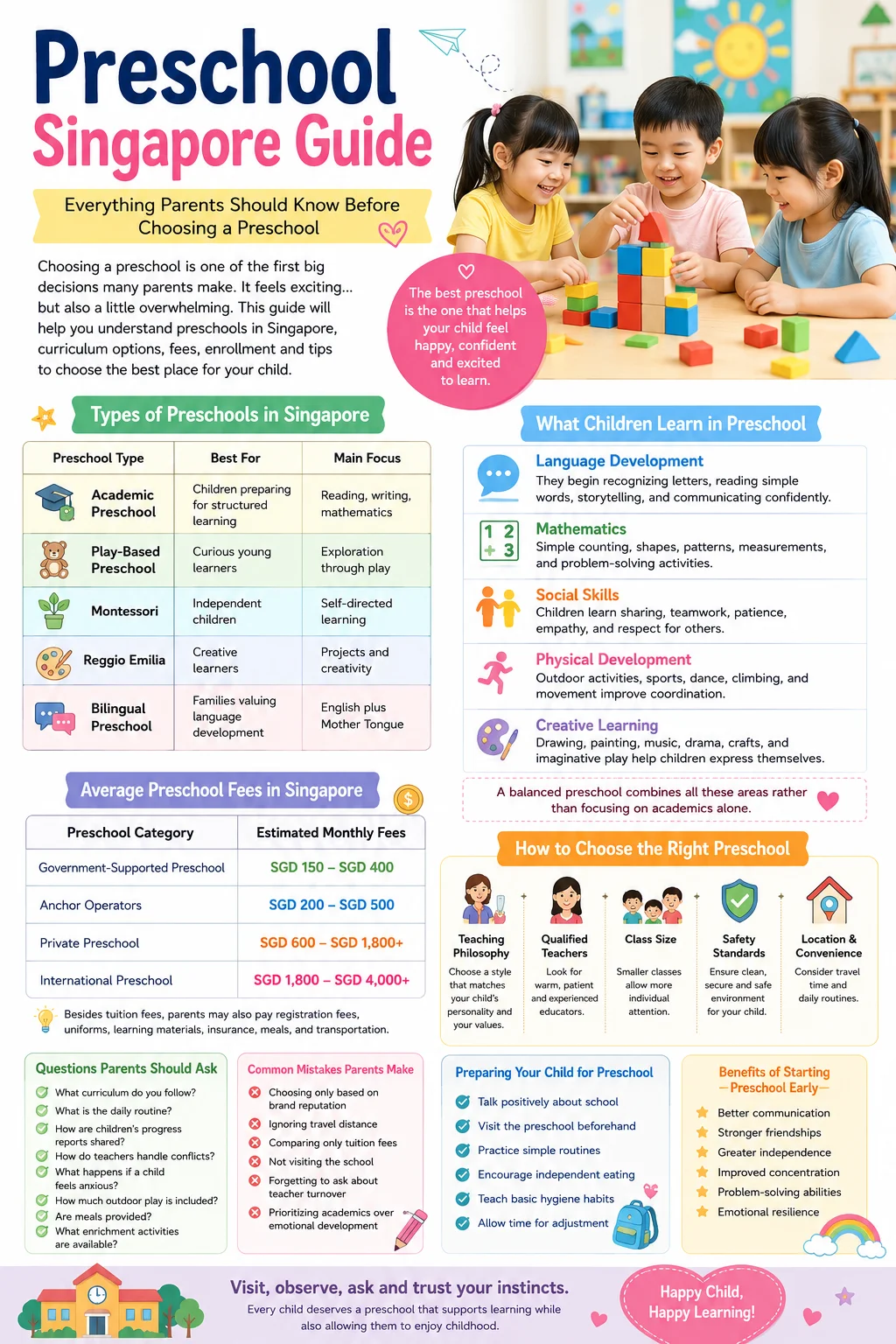
Choosing a preschool is one of the first big decisions many parents make. It feels exciting… but also a little overwhelming. Every preschool promises a nurturing environment, experienced teachers, and a curriculum designed for young learners. So how do you know which one is actually the right fit?
This Preschool Singapore Guide is here to make things easier. Instead of rushing into a decision, you’ll understand how preschools work in Singapore, what different learning approaches look like, how much parents usually spend, and the important questions to ask before enrolling your child.
Every child learns differently. That’s why the best preschool isn’t always the most expensive one—it’s the one that helps your child feel happy, confident, and excited to learn.
Why Preschool Matters
The early years play a huge role in a child’s development. During preschool, children don’t just learn numbers and letters. They also build communication skills, emotional confidence, creativity, and independence.
A good preschool helps children:
- Develop language skills
- Improve social interaction
- Build confidence
- Learn routines
- Strengthen motor skills
- Encourage curiosity
- Prepare for primary school
And perhaps most importantly… children learn how to enjoy learning itself.
Types of Preschools in Singapore
Not every preschool follows the same teaching style. Understanding the differences can help parents choose wisely.
| Preschool Type | Best For | Main Focus |
|---|---|---|
| Academic Preschool | Children preparing for structured learning | Reading, writing, mathematics |
| Play-Based Preschool | Curious young learners | Exploration through play |
| Montessori | Independent children | Self-directed learning |
| Reggio Emilia | Creative learners | Projects and creativity |
| Bilingual Preschool | Families valuing language development | English plus Mother Tongue |
This Preschool Singapore Guide recommends visiting multiple schools before making a final decision because classroom atmosphere often matters more than brochures.
What Children Learn in Preschool
Preschool education is much broader than many parents expect.
Children usually learn:
Language Development
They begin recognizing letters, reading simple words, storytelling, and communicating confidently.
Mathematics
Simple counting, shapes, patterns, measurements, and problem-solving activities become part of daily lessons.
Social Skills
Children learn sharing, teamwork, patience, empathy, and respect for others.
Physical Development
Outdoor activities, sports, dance, climbing, and movement improve coordination.
Creative Learning
Drawing, painting, music, drama, crafts, and imaginative play help children express themselves.
A balanced preschool combines all these areas rather than focusing on academics alone.
Average Preschool Fees in Singapore
Costs vary depending on the school type, location, and curriculum.
| Preschool Category | Estimated Monthly Fees |
| Government-Supported Preschool | SGD 150 – SGD 400 |
| Anchor Operators | SGD 200 – SGD 500 |
| Private Preschool | SGD 600 – SGD 1,800+ |
| International Preschool | SGD 1,800 – SGD 4,000+ |
Besides tuition fees, parents may also pay registration fees, uniforms, learning materials, insurance, meals, and transportation.
This is why every Preschool Singapore Guide should encourage parents to calculate the total yearly cost—not just monthly tuition.
How to Choose the Right Preschool
Every family has different priorities. Some focus on curriculum, while others care more about location or teacher quality.
Here are several things worth considering.
1. Teaching Philosophy
Ask yourself whether you want:
- Structured learning
- Play-based education
- Montessori
- Creative learning
- Bilingual education
There isn’t one perfect answer.
2. Qualified Teachers
Teachers influence your child’s preschool experience more than the building itself.
Look for:
- Professional qualifications
- Warm communication
- Patience
- Positive classroom management
- Experience with young children
3. Class Size
Smaller classes usually allow teachers to spend more individual time with each child.
Ask about:
- Teacher-to-child ratio
- Number of assistants
- Classroom supervision
4. Safety Standards
A preschool should provide:
- Secure entrances
- Clean classrooms
- Safe playgrounds
- Emergency procedures
- First-aid trained staff
Safety should never be overlooked.
Questions Parents Should Ask During a School Visit
Before enrolling, prepare a list of questions.
Some useful ones include:
- What curriculum do you follow?
- What is the daily routine?
- How are children’s progress reports shared?
- How do teachers handle conflicts?
- What happens if a child feels anxious?
- How much outdoor play is included?
- Are meals provided?
- What enrichment activities are available?
A school that answers openly often builds more trust.
Signs of a Good Preschool
Sometimes, you can tell within minutes whether a preschool has a positive environment.
Look for:
- Happy children
- Friendly teachers
- Clean classrooms
- Organized activities
- Safe learning spaces
- Active communication with parents
- Balanced learning and play
The atmosphere often speaks louder than marketing materials.
Common Mistakes Parents Make
Many families unintentionally focus on the wrong factors.
Some common mistakes include:
- Choosing only based on brand reputation
- Ignoring travel distance
- Comparing only tuition fees
- Not visiting the school
- Forgetting to ask about teacher turnover
- Prioritizing academics over emotional development
This Preschool Singapore Guide encourages parents to think about their child’s personality first.
Preparing Your Child for Preschool
The first few weeks can feel emotional—for both parents and children.
You can make the transition smoother by:
- Talking positively about school
- Visiting the preschool beforehand
- Practicing simple routines
- Encouraging independent eating
- Teaching basic hygiene habits
- Allowing time for adjustment
Every child adapts differently. Some feel comfortable within days, while others need several weeks.
That’s completely normal.
Benefits of Starting Preschool Early
Early preschool experiences often help children become more confident before entering primary school.
Children may develop:
- Better communication
- Stronger friendships
- Greater independence
- Improved concentration
- Problem-solving abilities
- Emotional resilience
These benefits continue long after preschool ends.
Final Thoughts
Choosing the right preschool isn’t about finding the most popular name. It’s about finding an environment where your child feels safe, curious, and excited every morning.
Hopefully, this Preschool Singapore Guide has made the process a little clearer.
Visit different schools. Observe classrooms. Speak with teachers. Ask plenty of questions.
Every child deserves a preschool that supports learning while also allowing them to enjoy childhood—and that’s something every parent can feel good about.
What age can children start preschool in Singapore?
Many children begin preschool from around 18 months to 3 years old, depending on the programme and the school’s admission policy.
How much does preschool cost in Singapore?
Monthly fees generally range from around SGD 150 for government-supported options to over SGD 4,000 for some international preschools.
Is play-based learning effective?
Yes. Play-based learning helps children develop creativity, communication, confidence, and problem-solving skills while keeping learning enjoyable.
Should I choose a preschool near home or work?
Both options have advantages. Most parents prefer a preschool close to home to reduce daily travel time and make routines easier.
How early should I register for preschool?
Popular schools may have waiting lists, so many parents begin researching and applying several months—or even a year—in advance.
What should I look for during a preschool visit?
Observe the classroom environment, teacher interactions, safety measures, cleanliness, daily routines, and whether the children appear happy and engaged.

