
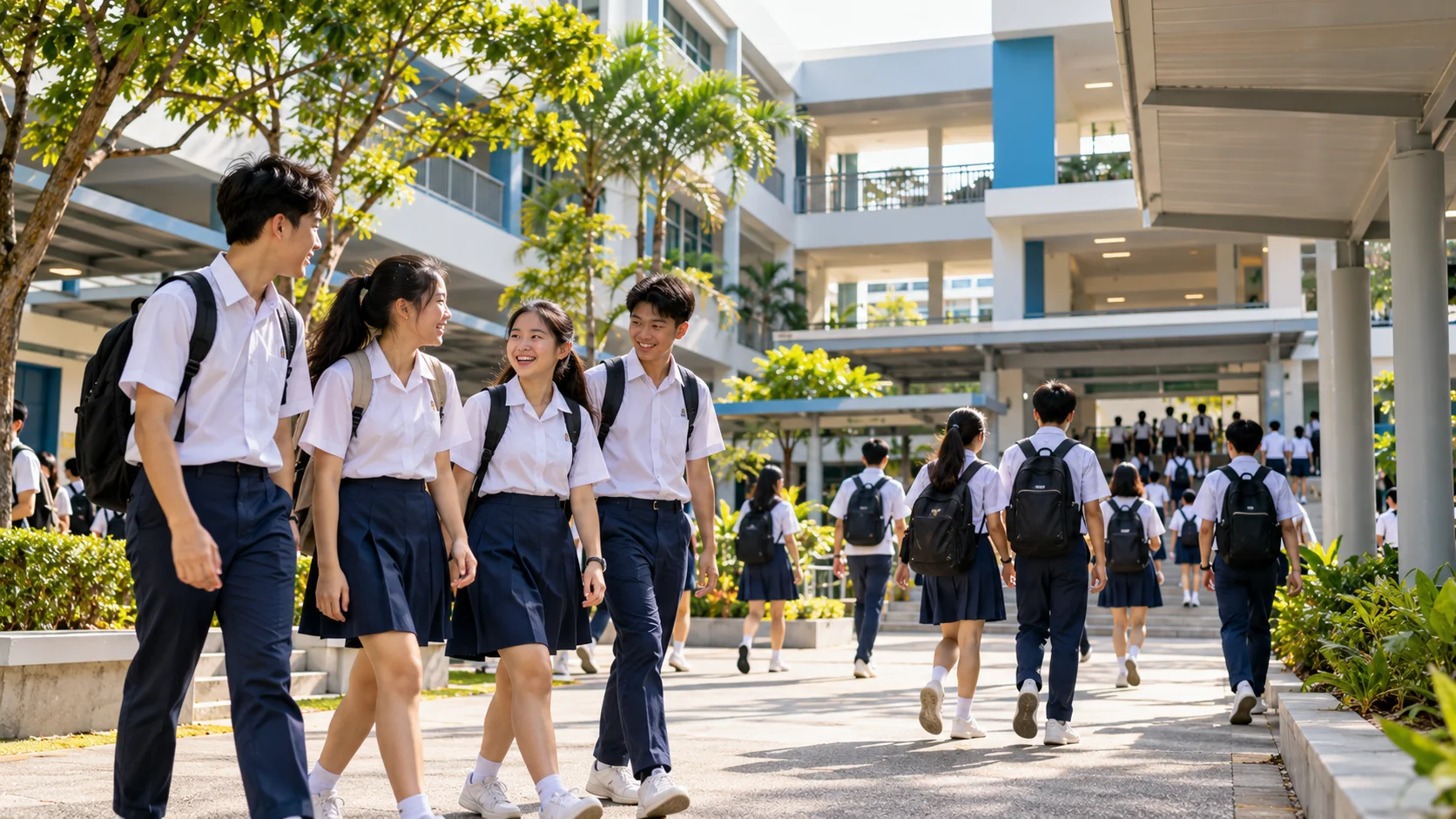

The Singapore Academic Calendar 2026 includes school term dates, holiday breaks, public holidays and important examination periods for students across Singapore. Knowing these dates helps parents plan family trips, students organise revision schedules and teachers prepare classroom activities.
Most Ministry of Education (MOE) primary and secondary schools follow a four-term academic year from January to November. Junior colleges, polytechnics and universities have different schedules.
Here is a practical guide to the 2026 academic year, with the dates and details that matter most.
Singapore Academic Calendar 2026: Complete School Term Dates
Singapore’s government primary and secondary schools divide the academic year into four terms and two semesters.
| Academic Period | Start Date | End Date |
|---|---|---|
| Term 1 | 2 January 2026 | 13 March 2026 |
| March Holidays | 14 March 2026 | 22 March 2026 |
| Term 2 | 23 March 2026 | 29 May 2026 |
| June Holidays | 30 May 2026 | 28 June 2026 |
| Term 3 | 29 June 2026 | 4 September 2026 |
| September Holidays | 5 September 2026 | 13 September 2026 |
| Term 4 | 14 September 2026 | 20 November 2026 |
| Year-End Holidays | 21 November 2026 | 31 December 2026 |
These dates apply to the standard MOE primary and secondary school calendar. Kindergarten, junior college and other institution schedules can differ.
What Makes Singapore’s School Year Different?
Unlike countries where the academic year begins in August or September, Singapore’s government school year starts in January.
This arrangement divides learning into four manageable terms. Students have opportunities to rest between terms while continuing their education throughout the year.
Two Semesters, Four Terms
The first semester includes Term 1 and Term 2, ending before the June holidays.
The second semester includes Term 3 and Term 4, ending in November.
Each term has its own classroom activities, learning objectives and assessments. Schools may also organise sports events, educational visits and co-curricular activities.
Why the Holiday Breaks Matter
The short March and September holidays allow students to recharge between terms.
The longer June and year-end holidays provide additional time for family activities, enrichment programmes and independent learning.
For students preparing for national examinations, these breaks can also provide valuable revision opportunities.
Singapore School Holidays 2026: What to Expect
Singapore has four main school holiday periods during the academic year.

March Holidays: A Short Mid-Semester Break
The March holidays run from 14 to 22 March 2026.
After completing the first term, students have approximately one week away from regular lessons.
Families can use this time for short trips, recreational activities or visits to Singapore attractions.
Students who need additional academic support may also attend revision workshops or tuition classes.
June Holidays: The Main Mid-Year Break
The June holidays begin on 30 May and end on 28 June 2026.
This four-week break is one of the longest holiday periods during the school year.
It is a popular time for family vacations, holiday camps and enrichment activities.
For Primary 6 and graduating secondary school students, June may also be an opportunity to strengthen weaker subjects before examinations.
September Holidays: Time to Prepare for the Final Term
The September school holidays take place from 5 to 13 September 2026.
This break arrives shortly before the final school term.
Students preparing for major examinations may use the week to practise past-year questions, review notes and complete revision plans.
However, sufficient rest is equally important for maintaining concentration.
November and December: The Longest School Break
The year-end holidays begin on 21 November 2026.
For most primary and secondary students, this marks the end of regular lessons for the academic year.
Families often use this period for overseas travel, festive celebrations and preparation for the next school level.
Students moving from primary to secondary school may also need to complete school posting and registration procedures.
School Holidays That Parents Sometimes Overlook
Apart from the four main holiday periods, Singapore schools observe several additional holidays.
Youth Day
Youth Day is observed in schools to recognise young people and their contributions to society.
In 2026, the scheduled school holiday is Monday, 6 July.
Teachers’ Day
Teachers’ Day recognises the contributions of educators.
The scheduled school holiday falls on Friday, 4 September 2026.
Children’s Day
Children’s Day is especially relevant to primary school students.
In 2026, the designated primary school holiday falls on Friday, 2 October.
These additional holidays can affect childcare arrangements, family schedules and school activities.
Public Holidays and Their Impact on School Schedules
Singapore’s national public holidays can create additional breaks during the academic year.
Chinese New Year falls on 17 and 18 February 2026, giving students time to celebrate with their families.
Good Friday falls on 3 April, while Labour Day takes place on 1 May.
National Day falls on Sunday, 9 August, with Monday, 10 August observed as a public holiday.
Deepavali falls on Sunday, 8 November, with Monday, 9 November observed as a public holiday.
Some public holidays overlap with school holidays, while others fall during teaching terms.
Parents should check the official
when planning activities.
Junior College Academic Calendar 2026
Junior colleges follow a slightly different academic schedule from primary and secondary schools.
When Does Junior College Start?
Returning JC2 students generally begin their academic year in January.
JC1 students typically begin in February after the Joint Admissions Exercise posting process.
The different starting dates allow newly admitted students to complete enrolment and orientation activities.
Academic Priorities for JC Students
Junior college students follow a demanding academic programme that includes lectures, tutorials, practical lessons and assessments.
For JC2 students, the GCE A-Level examinations are a major academic milestone.
Schools may organise preliminary examinations and additional revision sessions before national examinations.
Because arrangements differ between institutions, students should follow their college’s official calendar.
Polytechnic Academic Calendar 2026
Singapore’s polytechnics generally operate on an April-to-March academic cycle rather than the January-to-November school calendar.
How Polytechnic Semesters Work
Most full-time diploma programmes have two main semesters.
The first semester commonly begins in April, while the second begins around October.
Students may have vacation periods, examinations, project submissions and practical training between semesters.
Internships and Industry Training
Some diploma programmes include internships lasting several months.
Students undertaking internships may not follow the same vacation schedule as classmates attending regular lessons.
Academic calendars can also differ across Singapore Polytechnic, Ngee Ann Polytechnic, Temasek Polytechnic, Nanyang Polytechnic and Republic Polytechnic.
University Academic Calendar in Singapore
University students follow institution-specific calendars based on their degree programmes.
August Intake and Semester Structure
Many undergraduate programmes at the National University of Singapore and Nanyang Technological University begin their academic year in August.
The first semester generally runs through the later months of the year, while the second semester begins in January.
Different Programmes, Different Calendars
Some university programmes operate on trimester systems or have special teaching arrangements.
Medical courses, internships, exchange programmes and postgraduate studies may follow separate schedules.
Students should verify teaching weeks, examination dates and recess periods directly with their universities.
Important Examination Periods in 2026
National examinations influence how students plan their academic year.
Primary School Leaving Examination
Primary 6 students take the PSLE during the second half of the year.
Preparation usually becomes more focused as the examination period approaches.
Parents should follow official announcements for examination timetables and school posting procedures.
GCE O-Level and N-Level Examinations
Secondary school students preparing for national examinations may have different schedules from students in non-graduating classes.
Written examinations generally take place later in the academic year, while some oral and practical assessments occur earlier.
GCE A-Level Examinations
Junior college students preparing for the A-Levels follow subject-specific examination schedules.
Students can check confirmed national examination dates through the
Planning Family Holidays Around the Singapore Academic Calendar
School holidays are popular travel periods, but planning early can help families avoid unnecessary difficulties.
Choose the Right Holiday Period
The March and September breaks are suitable for shorter trips.
June and the year-end holidays provide more flexibility for longer vacations.
Families with children at different educational levels should compare their school calendars before booking travel.
Avoid Examination Conflicts
Parents of Primary 6, Secondary 4 and JC2 students should pay particular attention to examination schedules.
School-based assessments, oral examinations and practical tests may take place outside the main written examination periods.
Make Time for Activities Beyond Studying
School holidays do not need to revolve entirely around tuition and revision.
Children can explore libraries, museums, nature reserves and community activities.
A balanced schedule gives students opportunities to develop interests and return to school refreshed.
Frequently Asked Questions
1. When does school start in Singapore in 2026?
Most MOE primary and secondary schools begin on 2 January 2026, although some student groups have different reporting arrangements.
2. How many school terms are there in Singapore?
There are four school terms divided into two semesters for most government primary and secondary schools.
3. When are the June school holidays in 2026?
The June school holidays run from 30 May to 28 June 2026.
4. When is the September school holiday in Singapore?
The September school holiday runs from 5 to 13 September 2026.
5. When does the Singapore school year end?
The final term ends on 20 November 2026 for most MOE primary and secondary schools.
6. Do polytechnics follow the same academic calendar?
No. Most polytechnics begin their academic year around April and follow semester-based schedules.
7. Where can parents find official school holiday dates?
Parents can check the latest announcements on the
Final Thoughts
The Singapore Academic Calendar 2026 gives students and families a clear view of the school year, from January classes to the November and December holidays.
The four-term system helps parents plan around lessons, examinations and family commitments. Students in junior colleges, polytechnics and universities should also check their institution-specific schedules.
Keeping track of important academic dates early can make the year easier to manage while leaving enough time for rest, family activities and personal development.