
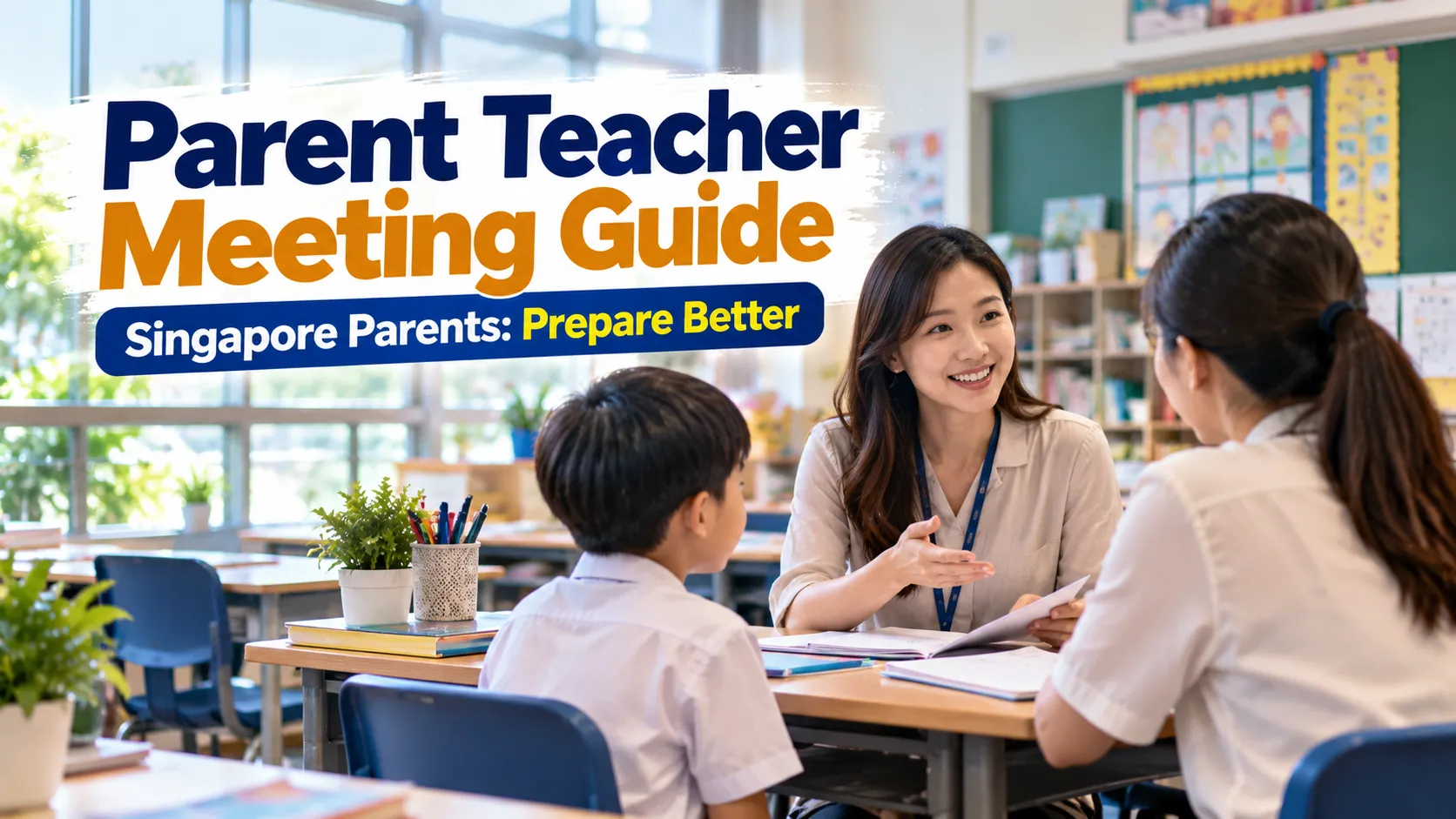

A Parent Teacher Meeting gives parents a chance to understand how their child is doing at school and have a direct conversation with the teacher. It isn’t only about marks or test results. A useful discussion can cover academic progress, classroom participation, behaviour, peer relationships, learning habits and the kind of support a child may need. A little preparation before the meeting can make those few minutes much more useful. In Singapore, schools may use terms such as Parent-Teacher Conference (PTC) or Meet-the-Parents Session, depending on the school and setting. The format can also vary, so check your school’s communication for the latest meeting details.
TL;DR — Parent Teacher Meeting Quick Guide
A productive parent teacher meeting starts with a little preparation. Review your child’s recent schoolwork, talk to your child, choose 3–5 priority questions, and ask the teacher about academic progress, classroom behaviour, participation and areas for improvement. Before leaving, agree on one practical next step for home or school.
| Before the Meeting | During the Meeting | Before You Leave |
| Review schoolwork | Ask specific questions | Identify one strength |
| Talk to your child | Discuss progress | Identify one priority |
| Prepare 3–5 questions | Listen to teacher feedback | Agree on next step |
| Check meeting details | Take brief notes | Know when to follow up |
How to Prepare for a Parent Teacher Meeting in Singapore
Good preparation doesn’t mean creating a long list of questions or spending hours going through every worksheet. A few focused steps can give you a much clearer starting point.
1. Review Your Child’s Recent Work
Look through recent assignments, assessments, projects or teacher comments before the meeting. You’re not trying to diagnose a problem yourself. Instead, look for patterns.
Is your child doing well in one subject but struggling with another? Are mistakes repeated? Has there been a change in learning progress or work habits?
Write down anything you want the teacher to explain. A specific question is usually more useful than simply asking, “How is my child doing?”
2. Talk to Your Child First
Your child may already know what is going well — or what feels difficult.
Try simple questions such as:
- “What do you enjoy most at school?”
- “Is anything difficult at the moment?”
- “Do you feel comfortable asking your teacher for help?”
- “Is there anything you want me to ask your teacher?”
This conversation can reveal things that aren’t obvious from schoolwork alone. It also gives your child a chance to share their experience before an adult-to-adult conversation takes place.
3. Prepare 3–5 Priority Questions
PTM appointment slots can be short, so don’t arrive with 20 questions and hope to cover everything.
Choose three to five questions that matter most right now. You can write them in your phone or bring a small notebook.
A useful mix could include one academic question, one classroom question, one social or wellbeing question, and one question about support at home.
4. Check Your School’s Meeting Details
Check the school’s communication channel for the appointment time, location and any instructions you need to follow.
For schools using Parents Gateway, parents may receive school-related information and administrative updates through the platform. MOE describes Parents Gateway as a portal supporting school-home communication, and its use has expanded across mainstream schools.
Also check whether your meeting is face-to-face or online, and whether you’re meeting the Form Teacher, a Subject Teacher, or more than one educator.
What Questions Should Parents Ask at a Parent Teacher Meeting?
The best questions move beyond “How is my child doing?” and ask for specific examples about learning, behaviour, participation and development.
Questions About Academic Progress
Academic performance naturally comes up during a PTM, but marks are only one part of the conversation.
Ask:
- What is my child doing well academically?
- Which areas need more support?
- Is my child progressing as expected?
- Are there particular skills we should practise at home?
- Can you give me an example of the area that needs improvement?
If the teacher mentions a weakness, ask what it looks like in actual classwork. For example, “Is the issue understanding the concept, completing the work, or making careless mistakes?” That extra detail can make home learning support much more focused.
Questions About Classroom Behaviour and Participation
A child’s experience in class can tell parents a lot about their learning habits.
You could ask:
- How does my child participate in class?
- Do they stay engaged during lessons?
- How do they respond when work becomes challenging?
- Do they ask for help when needed?
- Have you noticed any changes in classroom behaviour?
These questions can also reveal differences between home and school. A child who is very talkative at home may be quiet in class. Another child might understand the work but hesitate to participate.
That context matters.
Questions About Social Development and Wellbeing
School isn’t just about completing assignments. Peer relationships, confidence and a child’s comfort in the classroom can affect how they experience school.
Consider asking:
- How does my child interact with classmates?
- Do they participate comfortably in group activities?
- How is their confidence in class?
- Have you noticed any social or emotional concerns?
- Is there anything we should be aware of at home?
If a teacher raises a concern, ask for a specific example rather than trying to interpret a general comment yourself. You can then decide together what kind of support may be useful.
Questions About CCA and Broader Development

For older primary and secondary students, CCA involvement can also be part of the conversation. Ask about your child’s interests, participation, teamwork or leadership opportunities, while also considering the balance between schoolwork and activities.
A useful question is:
“Is there anything you’ve observed outside academic work that would help us better support our child?”
Singapore’s MOE also highlights the value of students developing interests, contributing to school life and taking part in CCAs as part of their school experience.
What If the Teacher Raises a Concern?
If a teacher raises a concern, don’t rush to defend or dismiss it. Ask for a specific example, understand how often it happens, and discuss what improvement would look like.
A simple Ask → Understand → Agree approach can keep the conversation productive.
| Step | What to Do |
| Ask | Request a specific example |
| Understand | Find out when and why it happens |
| Agree | Discuss a practical support strategy |
For example, if a teacher says, “Your child needs to focus more,” you could respond:
“Could you share an example of when you’ve noticed this, and what better focus would look like?”
Now you have something concrete to discuss. You can ask whether the pattern happens during particular subjects, activities or times of day, then talk about a realistic next step.
What Parents Should Avoid Saying During a PTM
A parent teacher meeting works better when both sides have room to explain what they’ve observed.
Try to avoid:
- Comparing your child with classmates
- Focusing only on marks
- Blaming the teacher
- Becoming defensive
- Demanding immediate solutions
- Making assumptions before hearing the full context
Instead of saying, “Why isn’t my child getting better marks?” try:
“What can we do at home to support this?”
That small change can turn a tense question into a practical conversation about teacher communication and support at home.
How to End a Parent Teacher Meeting With a Clear Plan
Don’t leave the meeting with a vague feeling that you “need to do something.” Before the conversation ends, try to get three clear answers:
1. One Strength
What is going well?
It could be a subject, learning habit, classroom behaviour, participation or another area the teacher has observed.
2. One Priority
What needs attention first?
A short list of five problems can feel overwhelming. One priority gives everyone something clear to work on.
3. One Next Step
What can parents and school do next?
Use the simple phrase:
One strength + one priority + one next step.
It gives the meeting a clear ending without turning it into a long action plan.
What to Do After the Parent Teacher Meeting
The conversation shouldn’t stop once you leave the school.

Talk calmly with your child about the useful parts of the feedback. Avoid making the discussion sound like a punishment or interrogation. Explain what the teacher said, then give your child a chance to respond.
If you agreed on a home learning strategy, start with something manageable. It could be practising a particular skill, creating a quieter study routine, encouraging your child to ask for help, or checking in about learning habits.
Monitor progress over the next few weeks. If the concern continues or a new issue appears, follow up with the teacher through the school’s usual communication channel.
That steady communication supports the school-home partnership that MOE promotes between parents and educators.
Parent Teacher Meeting Checklist for Singapore Parents
Before
☐ Review recent work
☐ Talk to your child
☐ Prepare 3–5 questions
☐ Identify one concern
☐ Check your meeting slot and details
During
☐ Ask about academic progress
☐ Discuss classroom participation
☐ Ask about behaviour and peer relationships
☐ Listen to teacher feedback
☐ Take brief notes
After
☐ Discuss the meeting with your child
☐ Follow the agreed action
☐ Monitor progress
☐ Follow up if necessary
FAQs About Parent Teacher Meetings
What should I ask at a parent teacher meeting?
Ask specific questions about academic progress, classroom participation, behaviour, peer relationships, learning habits and areas needing support. Asking for examples can make teacher feedback easier to understand and act on.
How should I prepare for a PTM?
Review recent schoolwork, talk to your child, identify any concerns and prepare three to five priority questions. Check your school’s meeting details as well, including the appointment time and meeting format.
What should parents ask about academic progress?
Ask what your child is doing well, which skills need support, whether progress is on track and what can be practised at home. You can also ask the teacher for a specific example of a difficulty.
What should I do if I disagree with the teacher?
Listen to the teacher’s observations first and ask for specific examples. You can then share what you’ve observed at home and ask questions about the difference. The aim is to understand the situation before deciding what support may be appropriate.
What should I do after a parent teacher meeting?
Talk with your child, follow the agreed action, watch for changes and contact the teacher again when appropriate. A follow-up doesn’t need to be complicated — it can simply check whether the agreed strategy is helping.
Parent Teacher Meeting Guide: Turn Feedback Into a Simple Next Step
A Parent Teacher Meeting is a two-way conversation, not simply a report card discussion. Parents can use the time to understand what the teacher has observed, what the child may need and what can be done at home. The one strength + one priority + one next step approach keeps the conversation focused and practical.
After the meeting, talk with your child calmly and give them space to share their side too. A short, focused conversation can give parents a clearer picture of learning progress, classroom experience, relationships and areas for growth — and it can make the next step much easier to see.