
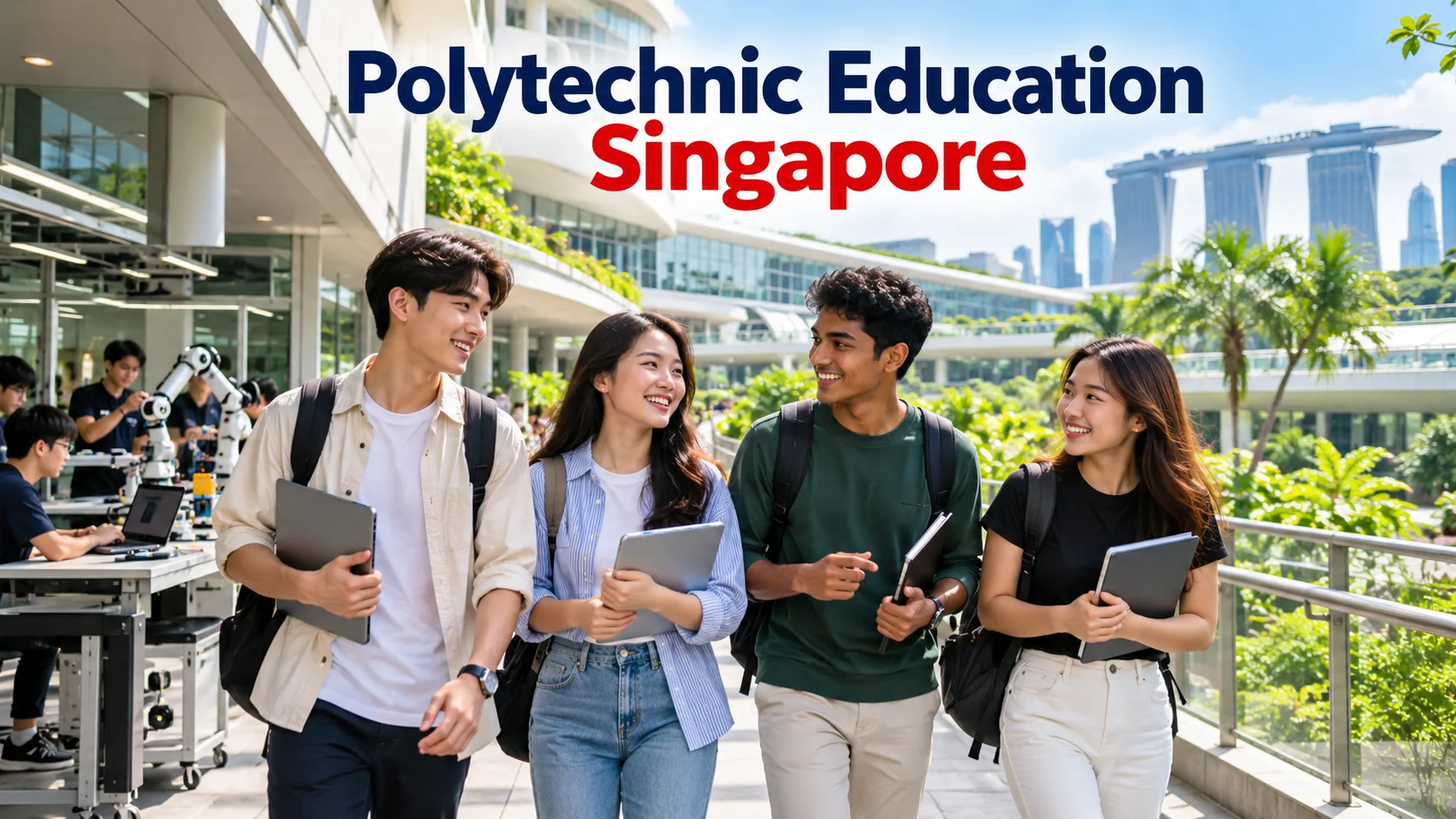

Polytechnic education in Singapore is a popular post-secondary pathway for students who prefer applied learning, practical training and industry-focused studies. Rather than concentrating mainly on classroom theory, polytechnic programmes combine academic knowledge with projects, laboratory work, practical assignments and workplace exposure.
For students deciding what to do after secondary school, a polytechnic diploma can provide a direct route into employment while still keeping the option of further education open. Polytechnic graduates may enter the workforce after completing their diploma or apply to universities based on their diploma qualifications and the admission requirements of the university and programme.
Singapore currently has five local polytechnics: Singapore Polytechnic, Ngee Ann Polytechnic, Temasek Polytechnic, Nanyang Polytechnic and Republic Polytechnic. Together, they offer diploma programmes covering fields such as engineering, business, information technology, applied science, design, media, healthcare and other professional areas.
What Is Polytechnic Education in Singapore?
Polytechnic education is designed around applied and practice-oriented learning. Students study the academic principles of their chosen field, but they are also expected to use those principles in projects, assignments and practical situations.
This makes the learning experience different from a route that is primarily designed around academic preparation. A student studying engineering, for example, may work on technical projects and laboratory assignments. A business student may analyse practical business situations or complete group projects. An IT student may develop software, work with data or solve technical problems.
Industry exposure is another important part of the polytechnic experience. The Ministry of Education notes that internships with industry partners form part of polytechnic curricula, giving students opportunities to develop their knowledge and skills in workplace environments.
The Five Polytechnics in Singapore
Students exploring polytechnic education Singapore options can consider five institutions:
| Polytechnic | Common Areas of Study | Learning Environment |
|---|---|---|
| Singapore Polytechnic (SP) | Engineering, computing, business, sciences, design and related fields | Applied and industry-oriented |
| Ngee Ann Polytechnic (NP) | Business, media, engineering, health sciences, IT and other disciplines | Project and practical learning |
| Temasek Polytechnic (TP) | Business, design, engineering, IT, applied science and related areas | Career-focused practical education |
| Nanyang Polytechnic (NYP) | Engineering, IT, business, health and applied sciences | Skills and industry-oriented learning |
| Republic Polytechnic (RP) | Technology, business, engineering, sports, hospitality and other areas | Applied and collaborative learning |
Course availability can change, so students should check the latest programme information and entry requirements before applying.
How Polytechnic Learning Works
Polytechnic education generally suits students who enjoy learning by applying concepts rather than relying only on textbooks and examinations.
Lessons may include lectures and tutorials, but students can also encounter laboratory sessions, workshops, presentations, group assignments, practical assessments and industry projects.
The exact structure depends heavily on the diploma. A science student may spend considerable time conducting experiments, while a media student may develop portfolios or production projects. Engineering students may work with technical systems and prototypes, while business students may complete market research or entrepreneurship projects.
This variety helps students understand how concepts learned in class relate to actual professional situations.
Choosing a Polytechnic Course
Choosing the right diploma is often more important than simply choosing a polytechnic based on its name.
Students should begin with their interests and strengths. Someone who enjoys mathematics and problem-solving might explore engineering, computing or data-related diplomas. A student interested in communication and creativity could consider media or design, while someone interested in healthcare might investigate relevant health science programmes.
Career direction should also be considered.
Students do not need to know exactly what job they want at a young age, but understanding the industries connected to a diploma can make the decision easier.
Before applying, it can help to look at:
- subjects covered throughout the diploma
- internship opportunities
- specialisations available
- assessment methods
- possible careers
- further-study pathways
- entry requirements
- previous admission ranges
Students should avoid selecting a course only because it appears popular. A diploma involves several years of focused study, so personal interest and suitability matter.
Polytechnic Admission in Singapore
There are different admission routes into polytechnic education, depending on a student’s qualifications and circumstances.
One familiar route for eligible students is the Joint Admissions Exercise (JAE). Course eligibility depends on meeting the relevant admission requirements.
For example, MOE’s 2026 JAE information for Singapore Polytechnic states that applicants seeking consideration for its courses need a net ELR2B2 aggregate score of 26 points or better, while individual courses also have their own minimum entry requirements. Previous-year aggregate ranges are provided as references rather than guaranteed future admission scores.
This distinction is important. A previous intake’s score range should not be treated as a fixed cut-off for a future intake because actual outcomes can change according to applicants’ results and course choices.
Polytechnic Foundation Programme
The Polytechnic Foundation Programme, commonly called PFP, provides another pathway for eligible students.
PFP is a one-year programme with a practice-oriented curriculum intended to prepare polytechnic-bound students for diploma education.
An important change applies from the Academic Year 2026 PFP intake. Students are generally admitted into a PFP cluster and progress to one of the diplomas within that cluster after completing the programme. Certain programmes, including Nursing, Early Childhood Development & Education and Tamil Studies with Early Education, have specific arrangements.
Students considering this route should check the current eligibility rules rather than relying on information from previous admission years.
Learning Through Internships
Internships are an important feature of polytechnic education in Singapore.
Students can spend part of their course working with an organisation related to their field. The experience gives them a chance to see how professional workplaces operate and apply skills developed during their diploma.
An internship can also teach lessons that are difficult to reproduce in a classroom.
Students may learn how to communicate with colleagues, work according to deadlines, respond to feedback and manage professional responsibilities. They may also gain a clearer understanding of the type of work they want to pursue after graduation.
MOE identifies internships with industry partners as part of the practice-based approach of polytechnic education.
Projects and Practical Assessments
Examinations are not the only way students may be assessed in polytechnic.
Depending on the programme, assessment can involve presentations, reports, practical tests, laboratory work, individual assignments and group projects.
This means students need skills beyond memorising information before an examination.
Time management becomes particularly important because several assignments may run at the same time. Group projects also require students to communicate effectively and divide responsibilities fairly.
Students who develop good working habits early can find it easier to manage these demands throughout their diploma.
Polytechnic vs Junior College
Polytechnic and junior college are both established post-secondary routes in Singapore, but the learning experiences are different.
Junior college generally follows a more academically oriented pathway leading towards the Singapore-Cambridge GCE A-Level examinations or other relevant qualifications.
Polytechnic students begin specialising in a particular field earlier and typically experience more applied and course-specific learning.
Neither pathway needs to be viewed simply as a higher or lower option. The more useful question is which learning environment and future pathway fit the individual student.
A student who already has a strong interest in areas such as cybersecurity, engineering, business, design or applied science may appreciate beginning specialised study earlier.
Someone who prefers a broader academic curriculum before selecting a university field may consider a different post-secondary route.
Can Polytechnic Students Go to University?
Yes. Completing a polytechnic diploma does not mean that a student’s education has to end at diploma level.
MOE states that polytechnic graduates who want to continue their studies may be considered for university admission based on their diploma qualifications.
Admission is not automatic. Requirements differ between universities and degree programmes, and factors such as academic performance and programme-specific criteria can matter.
Students who are considering university should therefore pay attention to their academic progress throughout their diploma instead of waiting until the final semester.
A diploma can also give students useful subject knowledge before university. Someone progressing into a related degree may already be familiar with concepts and practical skills relevant to the field.
Entering the Workforce After Polytechnic
University is only one possible route after graduation.
Polytechnic programmes are designed with employment and industry skills in mind, so graduates can also enter the workforce directly.
The types of roles available depend on the diploma. Graduates may find opportunities across technology, engineering, business, healthcare, media, design, hospitality and other sectors.
Internships and practical projects can become valuable experiences when preparing a resume or attending interviews.
Instead of discussing only classroom grades, graduates may be able to talk about projects they completed, problems they solved and skills they applied during workplace training.
Skills Students Can Develop
Polytechnic education can help students build both technical and transferable skills.
Technical skills are closely related to the diploma. A computing student and a hospitality student will naturally develop very different professional capabilities.
Transferable skills can be useful across many careers.
These may include communication, teamwork, presentation, problem-solving, independent learning and time management.
Students often have to balance multiple deadlines and collaborate with classmates. Over time, these experiences can help them become more comfortable managing responsibilities independently.
Cost and Financial Support
The cost of studying at a polytechnic depends on factors including citizenship and the applicable tuition arrangements.
Students who require financial assistance should check the latest schemes available rather than assuming that every student pays the same amount.
Singapore’s Higher Education Student Loan scheme supports eligible students studying approved MOE-subsidised programmes at publicly funded post-secondary institutions.
For full-time polytechnic diploma students, the available loan provision varies according to citizenship and eligibility. The scheme can cover part of subsidised tuition fees, while eligible students may also have access to living allowance support.
Families should review current terms before making financial decisions because eligibility criteria and arrangements can change.
Is Polytechnic Education Suitable for Every Student?
Polytechnic can be an attractive route, but it is not automatically the right choice for everyone.
Students who enjoy practical work, projects and specialising in an area of interest may find the environment suitable.
At the same time, choosing a specialised diploma requires thought. A student who has little interest in the subject may struggle to stay motivated over the duration of the programme.
Before making a decision, students can compare courses, attend open houses, review module descriptions and discuss options with parents, teachers or education and career guidance counsellors.
The aim should be to understand what studying the subject will actually involve rather than choosing solely on the basis of a course title.
Preparing for Polytechnic Life
The transition from secondary school to polytechnic can involve greater independence.
Students may have different schedules from day to day, multiple assignment deadlines and more responsibility for managing their own learning.
Developing a simple routine can help.
Keep track of deadlines from the beginning of the semester. Start major projects early instead of waiting until submission week. Participate actively in group assignments and ask lecturers for clarification when necessary.
Students should also make use of opportunities beyond formal lessons. Clubs, competitions, industry events and other activities can help them meet people and explore interests outside their core diploma.
Frequently Asked Questions
1. What is polytechnic education in Singapore?
Polytechnic education is a post-secondary pathway focused strongly on applied and practice-based learning. Students work towards diplomas while developing academic knowledge, practical abilities and industry-related experience.
2. How many polytechnics are there in Singapore?
Singapore has five local polytechnics: Singapore Polytechnic, Ngee Ann Polytechnic, Temasek Polytechnic, Nanyang Polytechnic and Republic Polytechnic.
3. How long is a polytechnic diploma in Singapore?
A full-time polytechnic diploma is commonly structured as a multi-year programme. Students should check the exact duration of their selected diploma with the relevant institution because programme structures and admission pathways can differ.
4. Can I enter university after polytechnic?
Yes. Polytechnic graduates can apply for university admission. Universities consider applicants according to their admission requirements, diploma qualifications and other applicable criteria.
5. Does polytechnic education include internships?
Industry exposure is an important feature of polytechnic education. MOE notes that internships with industry partners form part of the curriculum, helping students gain workplace experience and apply their skills.
6. What is the Polytechnic Foundation Programme?
The Polytechnic Foundation Programme is a one-year practice-oriented programme that prepares eligible students for polytechnic diploma education. From the AY2026 intake, the programme generally uses a cluster-based admission structure, with specified exceptions.
7. Is polytechnic better than junior college in Singapore?
The two pathways serve different learning preferences and education plans. Polytechnic provides earlier specialisation and stronger applied learning, while junior college generally follows a broader academic route. Students should compare their interests, preferred learning style and future study plans when deciding between them.
Final Thoughts
Polytechnic education in Singapore provides a practical route for students who want to develop specialised knowledge while gaining experience that connects their studies with industry.
Its combination of classroom learning, projects, practical assessments and internships can prepare students for both employment and further education. At the same time, the number of available courses means that choosing a diploma deserves careful consideration.
Students exploring polytechnic education should look beyond course names and previous admission scores. Reviewing the actual curriculum, understanding career possibilities and considering personal interests can lead to a more informed choice.
For students who enjoy applied learning and want to begin building skills in a specific field after secondary school, a Singapore polytechnic can provide a clear pathway towards a diploma, the workplace and potentially further university study.