

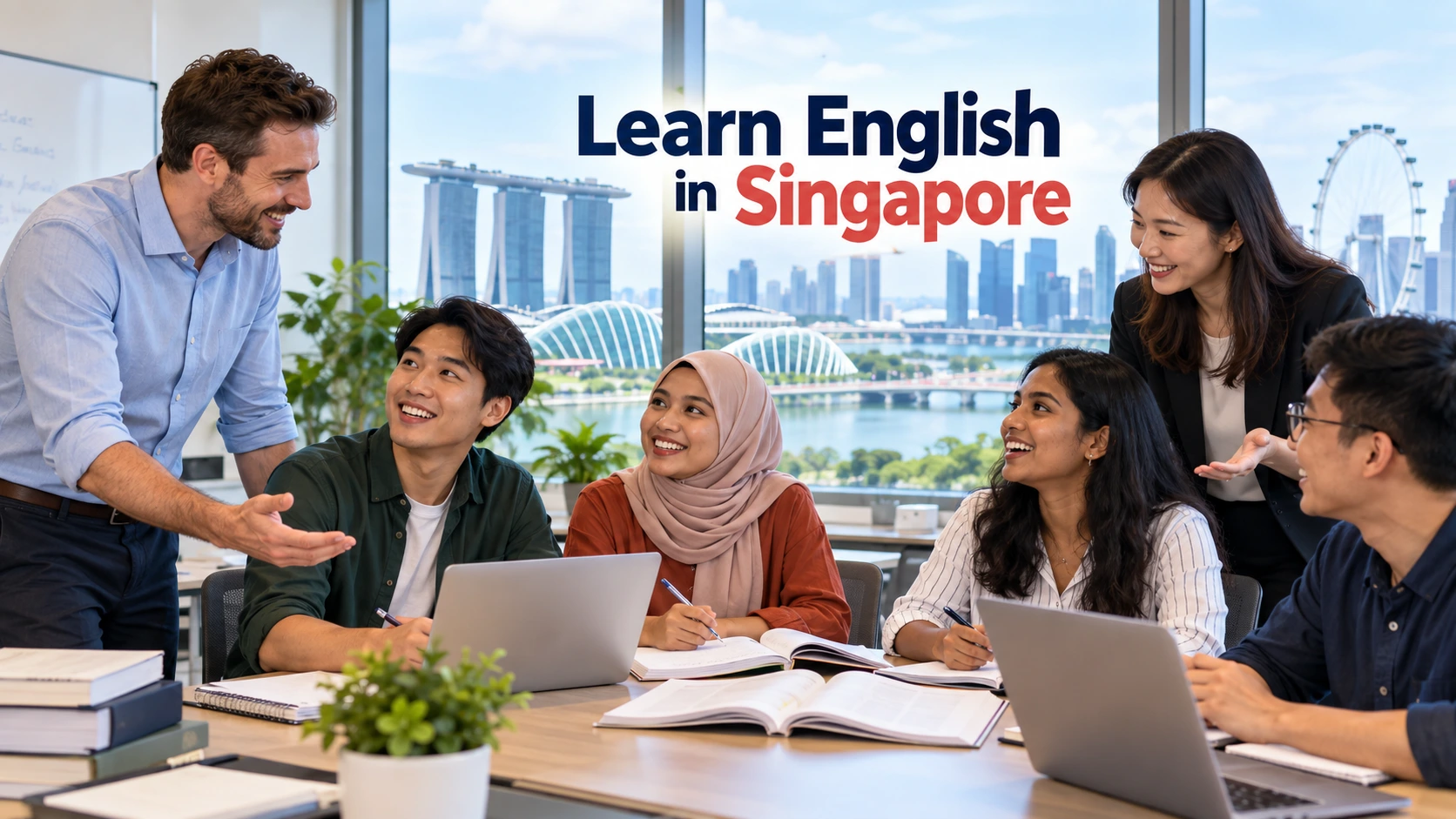
Singapore offers plenty of ways to learn English, from general English courses and conversational classes to business English, academic English and IELTS preparation. The right option usually depends on your current English level, learning goal, schedule and budget. Beginners may need basic language and speaking practice, while working adults may want better workplace communication for meetings, emails or presentations. Students may need academic English, and foreigners living in Singapore may prefer practical everyday communication. You can also choose between online and face-to-face learning, group English classes or private lessons. Before signing up, check the course level, class schedule, total fees and type of practice included.
TL;DR: English Learning Singapore at a Glance
English Learning Singapore covers general, conversational, business and academic English, plus IELTS preparation. Learners can choose private or group classes, online lessons or classroom study. Course fees vary by provider, course length, class size and specialization. A placement test can show your current level. Start by matching your goal, English level and schedule with a course that fits your budget and gives you regular opportunities to practise.
What Does English Learning in Singapore Include?
The phrase English Learning Singapore can mean different things depending on what a learner wants to achieve. Some people need basic English for everyday conversations. Others want better communication skills at work or stronger reading and writing for study.
General English
General English develops the main English language skills: speaking, listening, reading and writing. It can suit beginners and learners who want stronger day-to-day English proficiency.
Conversational English
Conversational English puts more attention on speaking skills, vocabulary, pronunciation and real conversations. It can be useful if you understand English but hesitate when speaking.
Business English
Business English focuses on workplace communication. Lessons may cover meetings, emails, presentations, phone calls and professional vocabulary.
Academic English
Academic English is useful for students who need support with academic reading, writing, discussions and presentations.
IELTS / Exam Preparation
IELTS preparation focuses on exam skills for listening, reading, writing and speaking. The course structure is usually built around the test format, question types and practice tasks.
Which English Course Is Right for You?
There isn’t one course that fits every learner. A beginner who wants to speak comfortably in daily situations has a different need from a professional preparing for presentations or a student preparing for an English exam.
| Course Type | Best For | Main Focus |
| General English | Beginners/everyday learners | Overall communication |
| Conversational English | Speaking improvement | Fluency and confidence |
| Business English | Working professionals | Workplace communication |
| Academic English | Students | Academic reading and writing |
| IELTS Preparation | Test takers | Exam skills |
| Private English Lessons | Specific needs | Individual feedback |
For English for beginners Singapore, General English is often a practical starting point because it covers several basic skills together. Learners who mainly want to speak more comfortably may prefer a conversational English Singapore course or an English speaking course.
Working adults may get more value from English for working adults Singapore or business English Singapore, particularly if their daily needs involve meetings, customers, colleagues or written communication. Students can look for academic English, while learners with a specific weakness may prefer private English lessons.
English Levels in Singapore: Where Should You Start?
Many English programmes use the Common European Framework of Reference for Languages (CEFR) to describe language levels. The scale runs from A1 to C2.
| Level | General Ability |
| A1 | Basic words and simple sentences |
| A2 | Simple everyday communication |
| B1 | Independent everyday communication |
| B2 | More confident work/study communication |
| C1 | Advanced communication |
| C2 | Very high proficiency |
Your current level matters because a class that is too easy can feel repetitive, while a class that is too difficult can make speaking practice uncomfortable. A placement test or English assessment can give you a clearer starting point.
If you are unsure, look at how comfortably you can handle everyday conversations, understand spoken English, write messages and explain your ideas. A formal assessment gives a more structured answer.
How Much Does English Learning Cost in Singapore?
English course fees Singapore can vary quite a bit. The final amount may depend on the provider, course duration, number of lessons, class size, teacher, teaching format and subject.
Private lessons usually cost differently from group classes because you are paying for more individual attention. Intensive courses may also have a different fee structure because they involve more learning hours in a shorter period.
| Learning Format | Cost Factors | Suitable For |
| Group classes | Duration, class size, frequency | General learners |
| Private lessons | Lesson length, teacher, package | Targeted learning |
| Online classes | Platform, teacher, format | Flexible learners |
| Intensive courses | Frequency and total hours | Faster-paced study |
| Exam preparation | Course length and specialization | IELTS/test candidate |
When comparing English class fees in Singapore, don’t look only at the advertised tuition. Check registration charges, learning materials, assessment fees and any other listed costs. Also compare the number of lessons and total learning hours. A lower headline price isn’t necessarily cheaper per lesson, and a higher fee may include more teaching time or individual feedback.
For current prices, check the provider’s latest fee schedule before enrolling because course fees and promotions can change.
Online vs In-Person English Classes in Singapore
Online English classes Singapore options have become useful for people who don’t want to travel to a training centre. Face-to-face classes still appeal to learners who prefer direct classroom interaction and a fixed study routine.
| Factor | Online English Classes | In-Person Classes |
| Flexibility | High | Depends on schedule |
| Travel | None | Required |
| Face-to-face practice | Varies | Direct |
| Location | Anywhere | Training centre |
| Best for | Busy learners | Classroom interaction |
Online learning can work well for working adults with limited travel time, especially when live lessons include speaking activities and feedback. In-person classes can make it easier to interact with classmates directly.
There is no need to treat one format as automatically better. Look at your routine first. If getting across Singapore after work is difficult, online English learning may fit more easily. If you learn better through direct classroom interaction, face-to-face English classes may suit you better.
How to Choose an English Course in Singapore
A course can look suitable on paper and still not fit your routine. Check these points before paying a course fee.
1. Check Your Current English Level
Take a placement test or English assessment if one is available. It can show whether you should start around A1, A2, B1 or another level.
2. Define Your Learning Goal
Be specific. Do you need better speaking skills, workplace English, academic writing, everyday communication or IELTS preparation? Your goal should guide the course type.
3. Compare Class Formats
Look at group English classes, private lessons, online learning and face-to-face study. Think about how much teacher feedback and speaking time you need.
4. Check the Schedule
Working adults may need evening English classes Singapore providers offer, weekend English classes Singapore options or a part-time English course Singapore learners can fit around work.
5. Look at Total Fees
Check tuition, registration, materials and other charges. Compare the total cost rather than one advertised figure.
6. Check Class Size and Course Structure
Class size can affect how much speaking time you get. Also check lesson length, course duration, assessment methods and the balance between speaking, listening, reading and writing.
7. Check What the Course Includes
Ask what you actually receive for the fee. Some programmes may include materials, assessments, practice sessions or additional support. A language school Singapore learners are considering should clearly explain the course structure before enrolment.
English Learning for Working Adults in Singapore
For working adults, English learning often connects directly with the workday. A learner may understand written English but struggle to speak during meetings, explain an idea in a presentation or handle a phone call with confidence.
An English for working adults Singapore course can focus on situations such as emails, meetings, presentations, customer communication and conversations with colleagues. Business English Singapore programmes may also include professional vocabulary and workplace communication skills.
Schedule matters here. Evening English classes Singapore providers offer can suit people after office hours, while weekend English classes may work better for those with busy weekdays. Online classes can also remove travel time.
The useful question is simple: What English do you actually use at work? Start there.
How to Improve Your English Outside Class
Class time is only part of language practice. Daily use can give you more chances to work on speaking, listening, vocabulary and pronunciation.
Try speaking English during everyday interactions instead of switching languages whenever a conversation feels difficult. At work, practise common situations such as introducing an idea, asking for clarification or explaining a task.
Read English news and listen to English podcasts that match your interests. Write short emails or messages and review mistakes later. Keep a small vocabulary list rather than trying to memorise hundreds of words at once.
And speak with classmates outside formal exercises when possible. Regular English speaking practice, listening practice and communication practice can make classroom learning feel more natural in real situations.
How Long Does It Take to Learn English?
There is no single timeline for learning English in Singapore. Progress depends on your starting level, weekly study hours, course intensity, regular practice and exposure to English.
Someone who studies several times a week and uses English daily may practise far more than someone attending one lesson occasionally. Speaking opportunities also matter, especially for learners who want better fluency.
Your goal changes the answer too. Improving basic everyday communication is different from reaching a level needed for academic study, professional communication or an English exam.
Instead of focusing only on a number of months, track practical progress — can you understand more, speak with less hesitation, write more clearly and handle situations that were difficult before?
Frequently Asked Questions About English Learning Singapore
Where can I learn English in Singapore?
You can learn English through language schools, training providers, private teachers and online platforms. Compare course level, schedule, format, class size and total fees before enrolling.
Can beginners learn English in Singapore?
Yes. Beginners can start with basic or General English courses. A placement test can help identify the right starting level and prevent you from joining a class that is too advanced.
How much does an English course cost in Singapore?
Fees vary according to the provider, course duration, class size, lesson format and specialization. Private, intensive and exam-preparation courses may have different pricing from standard group classes.
Are there English courses for working adults?
Yes. Working adults can find part-time, evening, weekend and online options. Business English and workplace English classes may focus on meetings, emails, presentations and customer communication.
What is the best English course for speaking?
A conversational English or General English course with regular live speaking practice can suit learners who want to improve speaking. Check how much classroom time is actually spent speaking.
Can I learn English online in Singapore?
Yes. Online English classes can provide live lessons without travel. Look for regular interaction, speaking activities, teacher feedback and a schedule you can maintain.
How do I know my English level?
A placement test or CEFR-based English assessment can give you a clearer idea. You can also review your ability in speaking, listening, reading and writing.
How long does it take to improve English?
It depends on your starting level, study frequency, practice habits and goal. Regular use of English outside class can give you more opportunities to practise between lessons.
Final Takeaway
English Learning Singapore covers much more than simply joining an English class. Start with your current level, then decide what you want to do better — speak in daily situations, communicate at work, study more comfortably or prepare for an exam. From there, compare the course type, online or face-to-face format, class schedule and total cost. If you want to learn English in Singapore, regular practice matters just as much as the lessons you attend. Small, consistent practice can add up over time.

