
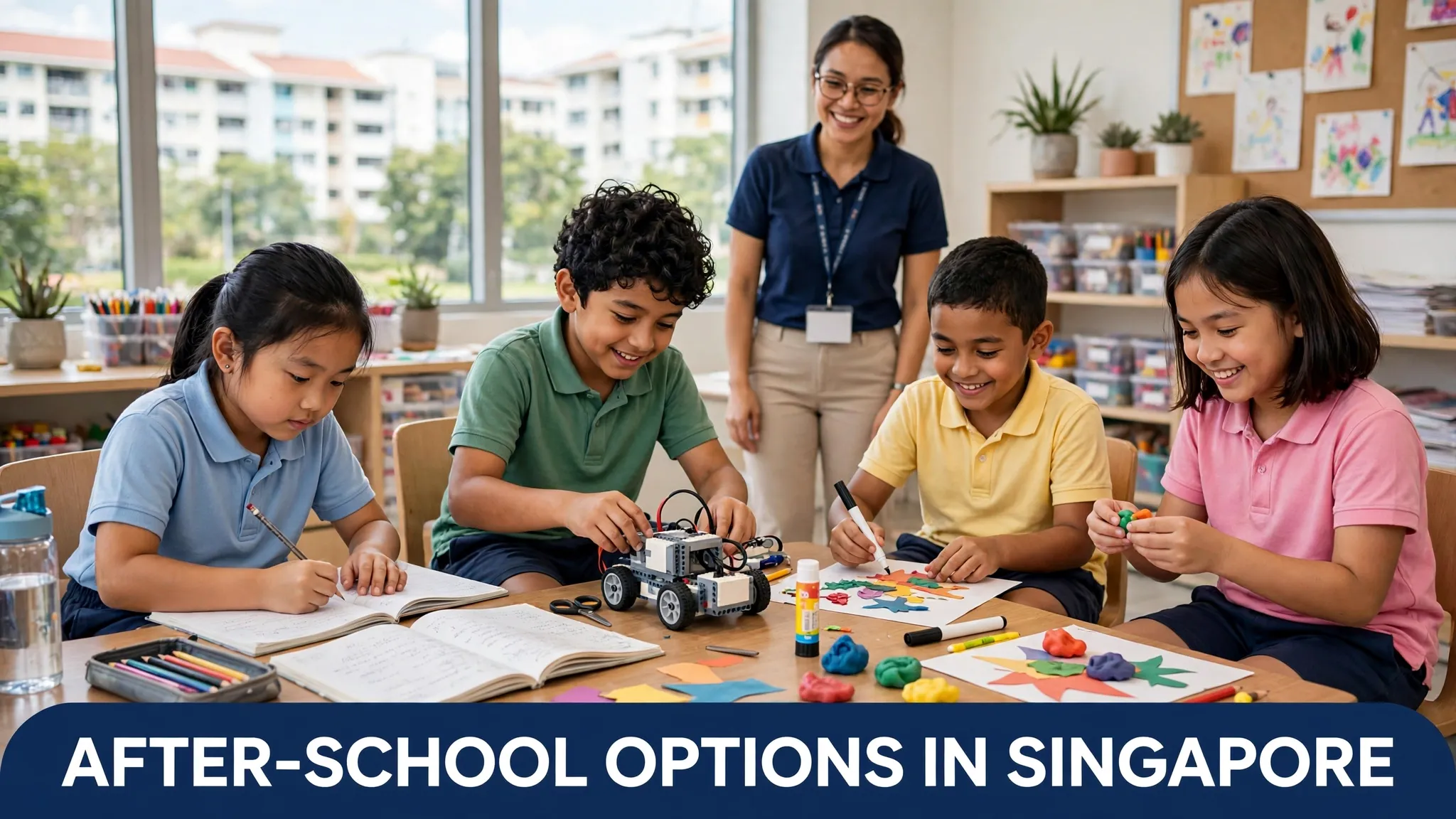

After school programmes in Singapore give children a place to learn, play and stay supervised after the school day ends. Options include student care centres, academic enrichment classes, sports, music, arts and coding activities. For working parents, these programmes can make the hours after school dismissal easier to manage while giving children time for homework, hobbies and social interaction. The right option depends on your child’s age, interests, daily schedule and family budget.
TL;DR: After School Programmes Singapore
After school programmes Singapore include student care, tuition, sports, creative arts and STEM activities. Student care centres provide supervision and may include meals, homework time and recreation, while enrichment classes focus on particular skills. Compare fees, location, operating hours and activities before enrolling. Eligible families may also receive Student Care Fee Assistance (SCFA).
What Are After School Programmes in Singapore?
After school programmes are organised care, learning or recreational activities that children attend outside regular school hours. In Singapore, the main options include Student Care Centres (SCCs), tuition centres and enrichment providers.
Student care centres mainly serve primary school children from Primary 1 to Primary 6. They may provide homework supervision, meals, rest periods and indoor or outdoor activities until parents collect their children. Centres can operate within or near schools, or at community locations.
Enrichment classes work differently. They usually run at set times and focus on a subject or activity, such as Mathematics, Chinese, swimming or coding. Some families use both student care and separate enrichment classes to fit their child’s routine.
Types of After School Programmes Available in Singapore
1. Student Care and Homework Support
Student care is a common option for families who need after-school supervision during working hours. School-based centres operate within or are linked to a school, while community-based centres are located outside school premises.
A typical routine may include lunch or refreshments, homework time, rest and supervised activities. Some centres also arrange school holiday care. Ask how staff support children who struggle with homework, whether meals are included and what time collection ends. Daily schedules differ between providers, so check the actual timetable rather than assuming every centre offers the same services.
2. Academic Enrichment Programmes
Academic enrichment classes give children extra practice in subjects they study at school. Popular options include English, Mathematics, Science and Chinese.
Some classes focus on reading, writing and comprehension, while others cover problem-solving, exam preparation or subject concepts. These sessions may suit children who want extra practice or need support with a particular topic.
Before signing up, ask about class size, lesson frequency, teaching materials and the level taught. A class should match your child’s current ability, not simply promise harder work.
3. Sports and Physical Activities
Sports programmes give children time to move after spending much of the school day in classrooms. Options in Singapore include swimming, football, martial arts, gymnastics and general fitness sessions.
Apart from physical activity, children can practise coordination, teamwork and following instructions. Check the coach’s experience, safety arrangements, class size and whether equipment is included in the fee. For swimming and martial arts, ask about the instructor-to-child ratio and the level of supervision during sessions.
4. Arts, Music and Creative Programmes
Creative classes offer a break from worksheets and screen-based learning. Children may try drawing, painting, crafts, music, dance or drama.
Some programmes teach a particular skill, such as playing an instrument or working with different art materials. Others focus on creative expression and group activities. Parents should check whether materials are included, how often children get to practise and whether beginners are welcome.
5. Coding and STEM Programmes
Coding and STEM classes introduce children to technology, science and practical problem-solving. Lessons may include beginner coding, robotics, simple science experiments and digital activities.
For younger children, sessions often use visual programming, games or hands-on projects. Older primary school students may work on more involved coding tasks or robotics challenges. Ask which tools are used, whether children need to bring a device and what they will create or learn by the end of the course.
Popular After School Activities for Children in Singapore
Activities differ from one provider to another. A student care centre may offer supervised games and creative sessions, while a specialist enrichment provider may focus on one subject or skill.
| Programme category | Common activities | Possible benefits |
|---|---|---|
| Academic | English, Mathematics, Science | Builds subject knowledge and learning foundations |
| Sports | Swimming, football, gymnastics | Supports fitness, coordination and teamwork |
| Creative arts | Music, drawing, drama | Encourages creativity and self-expression |
| STEM | Coding, robotics, experiments | Develops logical thinking and problem-solving |
| Language | Chinese, English, reading | Supports communication and language skills |
| Recreational | Indoor games, outdoor play | Encourages social interaction and group participation |
Not every centre provides all these activities. Check the weekly timetable and ask which sessions are included in the standard fee.
How Much Do After School Programmes Cost in Singapore?
The cost of after school programmes in Singapore depends on the provider, location, class frequency and services included. Student care centres usually charge monthly fees, while tuition, sports and creative classes may charge by subject, lesson, term or course.
Parents should also check for registration charges, deposits, learning materials, uniforms, equipment and transport costs. A low advertised fee may not cover every service your child needs.
After School Programme Pricing Comparison
| Programme type | Common fee structure | What parents should check |
|---|---|---|
| Student care | Monthly fees | Meals, supervision and school holiday care |
| Tuition | Per subject or monthly | Class frequency, duration and materials |
| Sports | Per term or monthly | Equipment, coaching and venue charges |
| Music and arts | Per lesson or term | Materials, practice sessions and instrument costs |
| Coding and STEM | Per course or workshop | Course length, devices and learning resources |
There is no single fee that applies to every provider. Request a written fee schedule and confirm what is included before paying a deposit. If you are comparing two centres, calculate the full monthly cost rather than looking only at the headline price.
Student Care vs After School Enrichment Programmes: What’s the Difference?
Student care and enrichment classes serve different purposes. Student care mainly provides supervision and a regular routine after school. Enrichment programmes focus on developing a particular subject or interest.
| Comparison | Student care | Enrichment programmes |
|---|---|---|
| Main purpose | Supervised after-school care | Skill or subject development |
| Duration | Usually longer daily sessions | Scheduled classes |
| Activities | Homework, meals and recreation | Subject or activity-based lessons |
| Schedule | Often regular weekdays | Selected days or terms |
| Main audience | Children needing after-school supervision | Children developing specific interests |
A child may attend student care on most weekdays and take a separate music, swimming or tuition class once or twice a week. The schedule should leave enough time for rest and play.
School-Based vs Community-Based Student Care Centres
Singapore families can consider school-based and community-based student care centres. School-based centres operate within or are associated with a school. Community-based centres are located at community premises or other facilities and may require children to travel after dismissal.
| Feature | School-based student care | Community-based student care |
|---|---|---|
| Location | Within or associated with a school | Community premises or other facilities |
| Travel | May reduce travel after school | May require travel from school |
| Availability | Depends on school arrangements | Depends on the provider |
| Main consideration | Access and enrolment arrangements | Transport and collection arrangements |
Ask about dismissal procedures, walking routes, transport arrangements and collection times. Also check whether the centre has places available for your child’s school and level.
How to Choose the Right After School Programme for Your Child
A suitable programme should fit into your child’s day without making the routine too tiring. Compare these points before enrolling.
Consider Your Child’s Age and Interests
Check that the programme accepts your child’s primary school level. Think about what they enjoy — academic practice, sports, music, art or hands-on activities. Their interests can make it easier to settle into a new routine.
Check Location and Daily Schedule
Look at the distance between school, the centre and home. Confirm who collects the child after dismissal, how transport works and what happens if school ends early. Ask about operating hours and school holiday coverage.
Review Safety and Supervision
Visit the premises if possible. Ask about staff experience, supervision arrangements, visitor access, emergency procedures and how the centre contacts parents if a problem occurs.
Compare Fees and Included Services
Request a full breakdown of monthly fees, deposits, meals, transport and additional enrichment charges. Check whether school holiday care costs extra.
Ask About Activities and Trial Sessions
Request a sample timetable. Ask about class sizes, parent updates, homework arrangements and trial sessions, if offered. A short visit or trial can give your child a better idea of the environment before you commit.
Student Care Subsidies in Singapore: Understanding SCFA
The Student Care Fee Assistance (SCFA) scheme helps eligible families pay for fees at participating Student Care Centres. It is administered by the Ministry of Social and Family Development (MSF), and the subsidy amount depends on household income and family size.
From 1 January 2027, the gross household income ceiling will increase to S$6,500 for families with four or fewer members. For households with five or more members, the per-capita income ceiling will increase to S$1,625. Eligible families may receive up to S$290 per child each month, with a one-time Start-Up Grant of up to S$400. Other eligibility conditions apply, including the centre’s registration and parents’ working hours. Check the official MSF SCFA information before applying.
Frequently Asked Questions About After School Programmes Singapore
What are the best after school programmes in Singapore?
The best option depends on what your family needs. Student care suits parents who need supervision after school, while tuition, sports, arts and coding classes suit children who want to develop particular skills or interests.
How much do after school programmes cost in Singapore?
Fees depend on the provider, programme, class frequency and included services. Student care usually charges monthly, while enrichment classes may charge per lesson, term or course. Ask for the full fee breakdown before enrolling.
Are after-school programmes suitable for Primary 1 to Primary 6 students?
Yes. Many student care centres cater to primary school children, although age groups, admission rules and available activities differ. Specialist classes may also divide children by age or ability.
Do student care centres provide homework supervision?
Homework supervision is commonly offered, but the level of help differs between centres. Ask whether children complete homework during a set period and whether staff guide them when they have difficulty.
Can parents get subsidies for student care in Singapore?
Eligible families may apply for Student Care Fee Assistance (SCFA) if their child attends an MSF-registered centre that administers the scheme. Eligibility depends on factors such as household income, family circumstances and employment requirements. Check the latest details with MSF.
Conclusion
After school programmes in Singapore cover student care, academic support, sports, creative activities and STEM learning. Compare the daily routine, fees, location and supervision before enrolling. A programme that fits your child’s interests and your family’s schedule can make after-school hours more manageable — and more enjoyable for your child.