
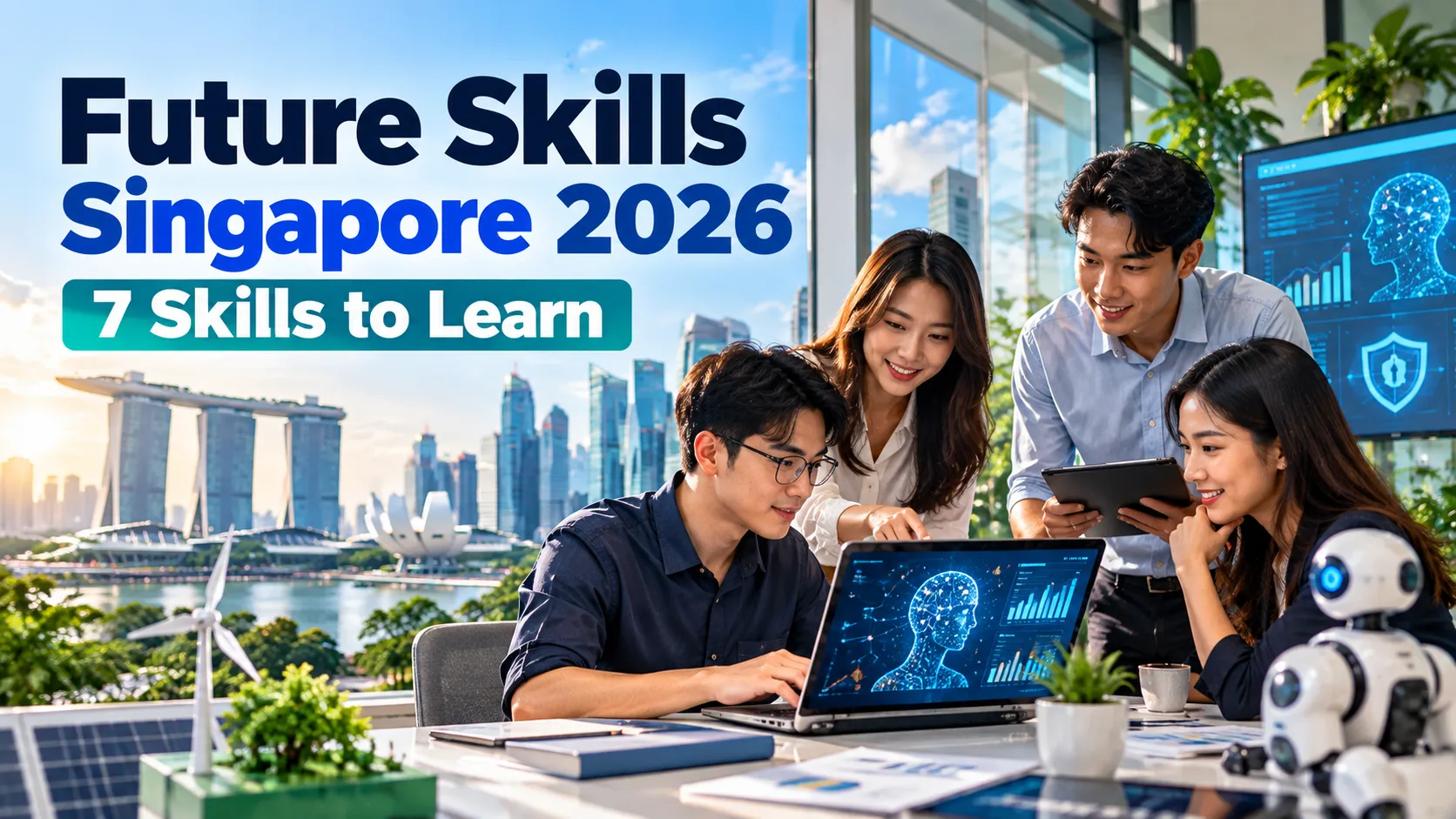

Singapore’s workforce is seeing growing demand for digital capabilities, technical knowledge and skills that help people adapt to changing job requirements. Future Skills Singapore covers the abilities people can develop to prepare for emerging work opportunities, from artificial intelligence (AI) and data analytics to cybersecurity, sustainability and communication. These skills can support students entering the workforce, professionals upgrading their knowledge and adults considering a career change. SkillsFuture Singapore provides training initiatives, while MySkillsFuture helps learners explore courses related to their career interests. The best starting point is to identify a skill gap, compare relevant training and check the available funding before enrolling.
TL;DR: Future Skills Singapore
Future skills are technical and transferable abilities that help people respond to changing workplace needs. In Singapore, useful areas to explore include AI, data analytics, cybersecurity, sustainability, automation, communication and digital marketing. MySkillsFuture and SkillsFuture Series offer ways to find relevant courses. Fees and subsidies depend on the programme and learner eligibility, so check the official course listing before registering.
What Are Future Skills in Singapore?
Future skills are capabilities that help people perform their work as technology, business practices and industry requirements change. Technical skills involve specific knowledge, such as analysing data, using AI tools or protecting digital information. Transferable skills include communication, collaboration, problem-solving and adapting to unfamiliar tasks. In Singapore, skills development can involve upskilling, which builds on knowledge you already have, or reskilling, which prepares you for different duties or a new occupation. Lifelong learning gives students and working adults opportunities to keep developing their abilities throughout their careers. The Ministry of Manpower’s Job Vacancies 2025 report, published on 20 March 2026, reported continued demand for technology and engineering professionals. It also described employers’ growing interest in skills and competencies when hiring.
7 In-Demand Future Skills in Singapore
1. Artificial Intelligence and Generative AI
AI literacy is becoming useful across office work, marketing, customer service and research. Learners can start with prompt writing, checking AI-generated information, data privacy and responsible AI use. For example, a marketing assistant might use an AI tool to draft content ideas, then check the facts and edit the wording before publication. Beginners can look for introductory AI courses in Singapore before moving into specialised technical training. Related keywords: AI skills Singapore, generative AI, AI literacy, AI courses for beginners Singapore.
2. Data Analytics and Data Literacy

Data analytics involves collecting, interpreting and presenting information to support decisions. Useful starting skills include spreadsheets, charts, dashboards and basic statistics. A retail worker might compare weekly sales to identify popular products, while an office professional could use reports to track team performance. Learners interested in deeper analysis can explore SQL, Power BI or Python, depending on the roles they want to pursue. Related keywords: data analytics courses Singapore, data-driven decision-making, data visualisation.
3. Cybersecurity and Digital Safety
Cybersecurity focuses on protecting systems, accounts and information from digital threats. Basic skills include spotting phishing messages, using secure passwords, managing access and handling personal data carefully. These habits are useful in many workplaces. People who want cybersecurity jobs will usually need more technical training in areas such as networks, operating systems and security monitoring. Related keywords: cybersecurity training Singapore, digital skills Singapore, cybersecurity risk.
4. Sustainability and Green Skills
Sustainability-related skills help organisations understand resource use, energy efficiency and environmental reporting. Depending on the industry, learners may explore carbon reporting, sustainable operations or green building practices. For example, a facilities employee might study ways to monitor energy use, while someone in corporate reporting could learn how environmental data is recorded. Related keywords: sustainability courses Singapore, green skills, carbon management, future economy skills.
5. Automation and Advanced Manufacturing
Automation skills are relevant to manufacturing, engineering, logistics and operations. Learning areas include automated workflows, process analysis and predictive maintenance. An operations employee might examine repetitive tasks to see where technology could reduce manual work. Some technical roles require specialist qualifications, so compare job requirements before selecting a course. Related keywords: automation skills, advanced manufacturing, industry-relevant skills.
6. Communication and Problem-Solving
Technical knowledge is only one part of workplace readiness. Clear writing, teamwork, listening, sound judgement and practical problem-solving are useful in customer service, management, education, healthcare and technical roles. A project coordinator, for example, needs to explain deadlines, share updates and resolve misunderstandings. Learners can practise these abilities through presentations, group projects and workplace assignments. Related keywords: transferable skills, communication skills, employability, problem-solving.
7. Digital Marketing and E-Commerce
Digital marketing covers how businesses reach customers online and measure campaign results. Skills include search engine optimisation (SEO), content planning, digital analytics, online advertising and e-commerce operations. A small business owner might review website traffic to learn which pages attract visitors, while a marketing assistant could use search data to plan useful content. Related keywords: digital marketing Singapore, SEO skills, e-commerce skills.
Future Skills Singapore: Quick Comparison
| Skill | Example application | Suitable learning goal |
|---|---|---|
| AI | Research and routine tasks | Digital productivity |
| Data analytics | Reports and business insights | Data literacy |
| Cybersecurity | Protecting workplace information | Digital safety |
| Sustainability | Energy and resource efficiency | Green skills |
| Automation | Improving work processes | Operational efficiency |
| Communication | Teamwork and problem-solving | Transferable skills |
| Digital marketing | Reaching online customers | Digital business skills |
Where to Learn Future Skills in Singapore
Singapore has official resources that can help learners compare courses and plan their training. Start by matching a programme to your current ability and career direction.
SkillsFuture Series

The SkillsFuture Series offers training in emerging skills across areas such as digital technologies, AI, sustainability and engineering. Course topics and levels vary, so check the current listings on the official SkillsFuture Series page.
MySkillsFuture
MySkillsFuture helps users search for courses and explore learning options. Review the course outline, provider, schedule, entry requirements and funding details before registering.
SkillsFuture for Digital Workplace 2.0
This programme covers foundational workplace digital skills, including AI, data analytics, automation, cybersecurity risks and digital tools. It is designed for Singaporeans with different levels of digital experience, including people who are returning to work. Check the official programme information for current details.
Career Pathways and Job Skills
Use Singapore’s Skills Frameworks and relevant job descriptions to see which skills and qualifications relate to your target occupation. This helps you choose training based on actual work requirements rather than course popularity alone.
Future Skills Singapore: Course Fees and Funding
There is no single price for future-skills courses in Singapore. Fees depend on the training provider, course duration, subject and funding eligibility. The figures below describe published support arrangements, not the retail price of a particular course.
| Cost or support | What to check |
|---|---|
| Full course fee | The provider’s published price |
| Course-fee subsidy | Applicable funding rate and eligibility |
| SkillsFuture Credit | Whether the course qualifies and your available balance |
| GST or other charges | Whether these are included in the quoted fee |
| Final payable amount | The amount confirmed by the provider |
For eligible Singapore Citizens and Permanent Residents, SkillsFuture Series courses may receive course-fee subsidies of up to 70%. Eligible Singapore Citizens aged 40 and above may qualify for subsidies of up to 90% under the SkillsFuture Mid-Career Enhanced Subsidy for applicable courses. Enhanced support can also apply to eligible small and medium-sized enterprises under the relevant scheme.

SkillsFuture Credit has two tiers: the base credit of S$500 for Singapore Citizens aged 25 and above, and S$4,000 in Mid-Career Credit for Singapore Citizens aged 40 and above, usable for selected courses. Credit eligibility varies by course, so confirm the terms on the official SkillsFuture Credit page.
Example calculation: If a course costs S$1,000 before funding and an eligible learner receives a 70% subsidy, the remaining course fee would be S$300 before any eligible credit or additional charges. This is a hypothetical example, not an advertised course price. Check MySkillsFuture and confirm the final amount with the provider before enrolling.
How to Choose the Right Future Skills Course
Identify Your Career Goal
Decide if you want to develop in your current role, prepare for a different position or move into another industry. Check job advertisements for the skills employers request.
Compare Courses and Requirements
Review course level, duration, practical exercises, assessments and entry requirements. A beginner may need foundational training, while an experienced worker may prefer specialised study.
Check Funding Eligibility
Confirm the course’s full fee, applicable subsidies, SkillsFuture Credit eligibility, GST and final payable amount. Do this before paying or making a registration commitment.
Practise Your New Skills
Use sample projects, workplace assignments or a portfolio to demonstrate what you have learned. Practical examples can help employers understand how your skills apply to real tasks.
Frequently Asked Questions About Future Skills Singapore
What Are the Best Future Skills to Learn in Singapore?
AI literacy, data analytics, cybersecurity, sustainability, automation and communication are useful areas to explore. Choose based on your occupation, interests and target job requirements.
Where Can I Find Future Skills Courses in Singapore?
Start with MySkillsFuture and the SkillsFuture Series. Compare course content, provider details, entry requirements and funding eligibility before registering.
Are SkillsFuture Courses Subsidised?
Some eligible courses receive course-fee subsidies. Funding rates depend on the programme and learner eligibility, so check the official listing for your estimated fee.
Can Beginners Learn AI Skills in Singapore?
Yes. Beginners can start with AI literacy, basic prompting and responsible AI use before progressing to specialised technical courses.
Will Learning Future Skills Guarantee a Job?
No. Training can develop relevant capabilities, but employment also depends on qualifications, experience, employer requirements and available vacancies.
Conclusion
Future Skills Singapore covers technical and transferable abilities that can help people prepare for changing workplace needs. AI, data analytics, cybersecurity, sustainability and communication offer different learning paths for students and working adults. Pick a skill related to your career plans, compare suitable courses and check current funding conditions through official sources before enrolling. Regular practice will help you apply what you learn at work or in personal projects.