
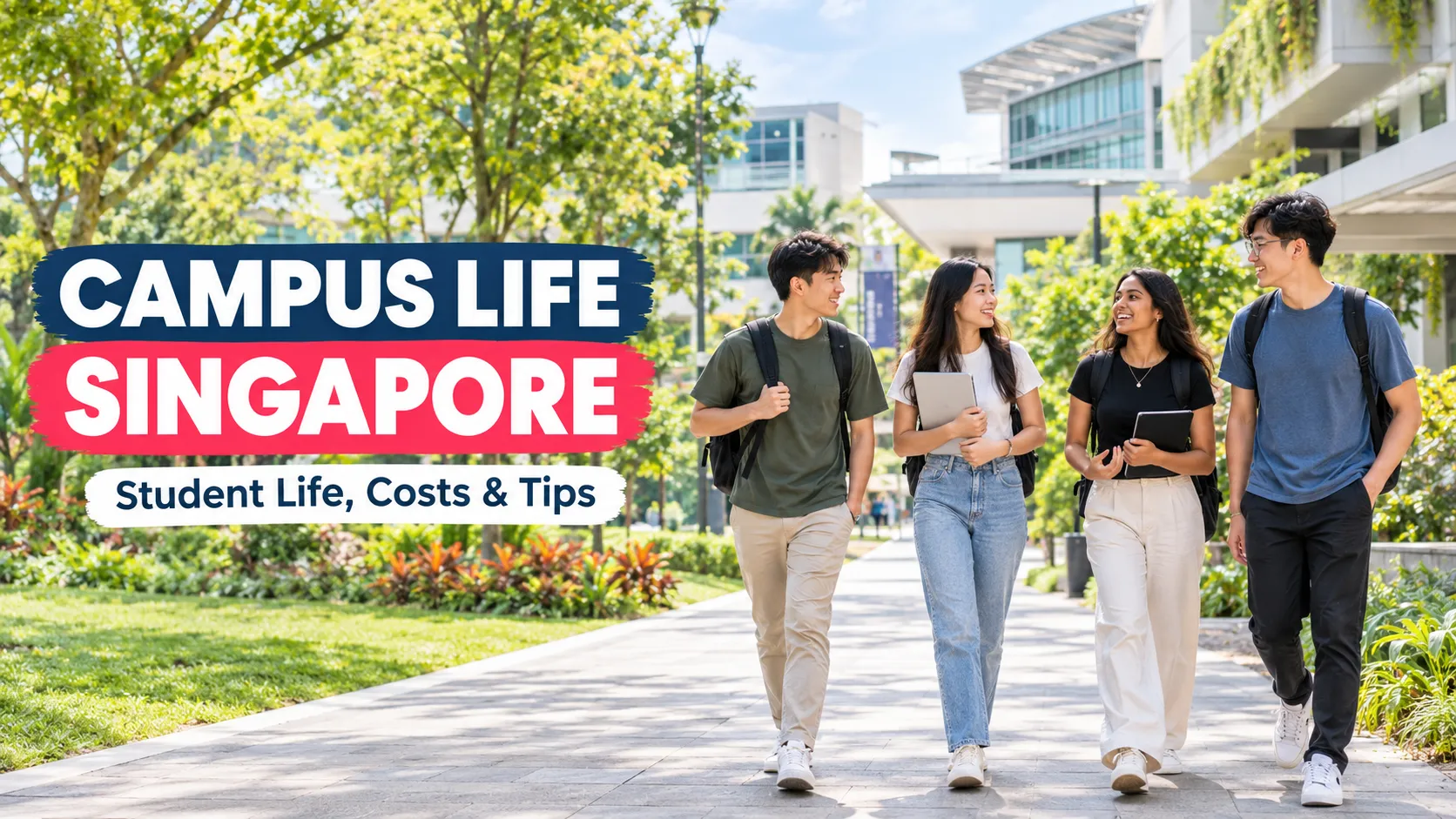

Campus life in Singapore brings together university classes, student clubs, social activities and the experience of living in a busy, multicultural city. From studying in a library to catching up with friends over chicken rice at a hawker centre, student life goes well beyond lectures. Campus Life Singapore can look quite different depending on your university, accommodation and personal interests. NUS and NTU offer residential campus experiences, while SMU has a city-centre setting. Housing, food, transport and everyday expenses also shape what student life feels like, so it helps to understand these details before settling into university.
TL;DR: Campus Life Singapore at a Glance
Campus life in Singapore combines academics, CCAs, student clubs, sports and social events. Universities offer different environments, from residential halls to city-based campuses. Students can live in university accommodation or rent privately, while monthly spending depends largely on housing, food and transport. Local food, MRT services and student support programmes can make daily life easier.
What Is Campus Life Like in Singapore?
Student life in Singapore usually involves a mix of lectures, tutorials, group projects, independent study and activities outside class. The exact routine depends on the university and course.
Some students spend long hours in libraries or project rooms, while others take part in sports, arts, volunteering or student societies after lessons. Campus facilities can include study spaces, food outlets, sports areas and places to meet friends. The setting matters, too. A university with residential halls may offer more opportunities to socialise close to home, while a city campus puts students near shops, public transport and other urban amenities. Singapore’s multicultural environment also brings students into contact with different languages, traditions and food cultures. For local students, university can be a chance to build new friendships beyond school or home. International students may also need time to adjust to local customs, the weather and independent living.
A Typical Day for a University Student
A student might attend morning lectures, have lunch at a campus canteen, work on a group assignment in the afternoon and join a club activity in the evening. Another student may commute home after class or spend the day at a part-time internship. There isn’t one fixed campus routine — and that flexibility is part of university life.
Campus Life at Major Singapore Universities
Singapore’s universities have different settings and student communities. The comparison below gives a starting point, but activities and facilities depend on each institution and its current offerings.
| University | Campus-life focus |
|---|---|
| National University of Singapore (NUS) | Campus facilities, student societies, sports and residential communities |
| Nanyang Technological University (NTU) | Residential hall activities, clubs, sports and a large campus setting |
| Singapore Management University (SMU) | City-centre campus, student organisations and shared study spaces |
| Singapore University of Technology and Design (SUTD) | Design-focused learning, collaborative projects and student activities |
| Singapore Institute of Technology (SIT) | Applied learning, student services and campus community |
At NUS, students can explore campus facilities, clubs and residential activities. NTU highlights hall life, student societies, sports and campus shuttle services on its official campus-life page.
SMU offers a different experience, with its city-centre location, student organisations, study spaces and campus housing options. SUTD and SIT have their own student activities and support services, so check each university’s current information before making comparisons.
There is no single campus style that suits everyone. Think about where you prefer to study, how you want to spend time outside class and whether living close to campus matters to you.
Student Clubs, CCAs and Social Life in Singapore

Student clubs and co-curricular activities (CCAs) give students ways to meet people outside their classes. Depending on the university,
options may include sports teams, performing arts, cultural groups, volunteering, student leadership and special-interest societies. Orientation programmes can be a good starting point for new students. You can meet classmates, learn about campus facilities and find groups that match your interests. NTU and SMU both publish information about their student activities and campus communities.
And you don’t have to join every club. Choose one or two activities that fit your schedule, then see how they work alongside your assignments and exams. Friendships often grow through small, repeated interactions — sharing lunch, studying together or turning up for the same weekly activity.
Student Accommodation in Singapore: On-Campus vs Off-Campus
Students in Singapore may apply for university halls of residence or other campus housing, subject to the institution’s rules, eligibility and available rooms. Private rentals are another option, including renting a room in a shared flat or house. Living on campus can make it easier to reach classes and join hall activities. Private accommodation may offer more choice over location or living arrangements, but commuting time, rent and utility bills need attention. Availability also varies. NTU, for example, publishes specific information about its residential halls and housing arrangements on its official accommodation page.
| Factor | On-campus housing | Off-campus housing |
|---|---|---|
| Convenience | Often close to classes and campus facilities | Travel time depends on the rental location |
| Social life | Hall activities and residential community | Depends on flatmates and neighbourhood |
| Privacy | Depends on room type and housing rules | Depends on the rental arrangement |
| Cost | Varies by hall, room and university | Varies by rent, location and utilities |
Before accepting a room, check what the fee includes, the length of the contract, move-in dates and any rules for visitors or shared facilities. Don’t assume a place is guaranteed just because a university has halls.
Cost of Student Life in Singapore
The cost of student life in Singapore depends heavily on accommodation, meal choices, transport and personal spending. NUS publishes annual estimates for meals, personal expenses, transport and housing. Its figures can be a useful reference, but your own budget may differ.
The table below uses monthly estimates published by NUS Graduate School for a single student’s daily expenses. Treat them as a planning reference, not a quote or a guarantee of current prices. The university notes that actual expenses vary with lifestyle and housing arrangements.
| Expense | On-campus estimate per month | Off-campus estimate per month |
|---|---|---|
| Accommodation | S$500–S$900 | S$650–S$1,800 |
| Food | S$300–S$500 | S$400–S$800 |
| Public transport | S$100–S$200 | S$200–S$300 |
| Personal expenses | S$300–S$500 | S$300–S$500 |
| Estimated monthly total | S$1,200–S$2,100 | S$1,550–S$3,400 |
Source: NUS Graduate School’s published cost-of-living estimates. Figures are indicative; verify current rates and check whether accommodation estimates include utilities. These totals exclude tuition fees and may not include every personal or leisure expense.
Housing can make the biggest difference to your monthly budget, particularly if you rent privately. Food spending may be lower if you regularly eat at campus canteens or hawker centres rather than choosing restaurants. Transport costs depend on where you live and how often you travel. Build a budget around your likely rent first, then add meals, transport, mobile service, study supplies and personal spending. Leave some room for unexpected expenses, too.
Food, Transport and Everyday Student Life

Campus canteens and food courts give students convenient meal options between classes. Outside university, hawker centres offer familiar Singapore dishes such as chicken rice, laksa and fishball noodles. Prices differ between stalls and locations, so check current menus instead of relying on a single national average. The MRT and public buses connect many residential areas, campuses and shopping districts. Some universities also run campus shuttles; routes and eligibility differ, so check the relevant university’s transport information before travelling. Singapore’s hot, humid weather and frequent rain can affect walking and cycling plans. Carry water, allow time for a sudden shower and check your commute before an early lecture. Nearby libraries, cafés, shops and malls can also become regular study or meeting spots.
Tips for Local and International Students
-
Join orientation activities: They offer a chance to meet classmates, learn campus routines and discover student clubs.
-
Plan accommodation early: Check application dates, eligibility, room fees and contract terms before committing.
-
Set a monthly budget: Start with housing, then estimate food, transport, mobile service and personal spending.
-
Learn your commute: Check MRT and bus connections, travel time and any campus shuttle arrangements.
-
Use student support: Find out how to access academic advice, counselling and wellbeing services at your university.
-
Check immigration requirements: International students should refer to the Immigration & Checkpoints Authority (ICA) for current Student’s Pass rules and instructions that apply to their situation. And give yourself time to settle in. It can take a while to find your preferred study spots, meet people you click with and work out a routine that suits your course.
Frequently Asked Questions About Campus Life Singapore
What is campus life like in Singapore?
Campus life in Singapore includes lectures, student clubs, sports, social events and shared study spaces. The experience varies by university, course, accommodation and personal interests.
Is Singapore expensive for university students?
It can be, particularly if you rent private accommodation. Housing, food and transport are major budget items, so compare current costs before deciding where to live.
Which university has the best campus life in Singapore?
There is no single answer for every student. Compare campus setting, clubs, residential options, location and activities that match your interests.
Do universities in Singapore offer student accommodation?
Several universities offer halls or other housing options, but eligibility, fees and room availability differ. Check your university’s current accommodation policy before applying.
Can international students join university clubs in Singapore?
Many clubs welcome eligible international students. Membership requirements and participation rules vary by university and student organisation, so check the relevant club’s details.
Final Thoughts on Campus Life Singapore
Campus life in Singapore is shaped by more than lectures and exams. Student clubs, accommodation, food, transport and friendships all influence the experience. Compare universities based on your academic interests, preferred campus setting and budget, then check current housing and student-service information before making plans.