
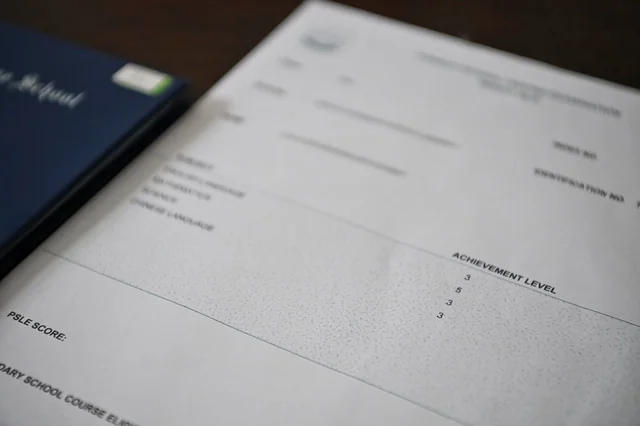

The PSLE grading system is one of the most discussed topics among parents and students in Singapore. Every year, thousands of Primary 6 students sit for the Primary School Leaving Examination (PSLE), making it one of the most important academic milestones in their educational journey.
Many parents still remember the older T-score system and often find the newer Achievement Level (AL) grading framework confusing. Questions such as “How is the PSLE score calculated?”, “What are Achievement Levels?”, and “How does secondary school posting work?” are common concerns.
This guide explains the PSLE grading system in simple language. It covers the scoring framework, Achievement Levels, school placement process, advantages of the new system, and practical strategies students can use to perform well.
By the end of this article, you will have a complete understanding of how the PSLE grading system works and what it means for a child’s educational future.
What Is the PSLE?
The Primary School Leaving Examination (PSLE) is a national examination taken by students at the end of primary education in Singapore.
The examination assesses a student’s readiness for secondary school and serves as a key benchmark for placement into different secondary school pathways.
Students are typically examined in four subjects:
- English Language
- Mathematics
- Science
- Mother Tongue Language
The results from these subjects are combined to form the student’s PSLE Score, which is then used for secondary school posting.
The PSLE has been part of Singapore’s education system for decades and continues to play an important role in helping students transition from primary to secondary education.
Understanding the New PSLE Grading System
The current PSLE grading system uses Achievement Levels (ALs) instead of the previous T-score method.
This change was introduced to reduce excessive competition among students and place greater emphasis on learning rather than chasing small score differences.
Under the new framework, students receive an Achievement Level for each subject based on their examination marks.
The four subject ALs are then added together to form the final PSLE Score.
A lower PSLE Score is better because it indicates stronger performance across subjects.
Why Was the T-Score System Replaced?
For many years, Singapore used the T-score system.
Under this method, students were graded based on how they performed relative to other students.
This created several challenges:
- Excessive competition among students
- Focus on tiny mark differences
- Increased academic pressure
- Difficulty understanding score calculations
- Overemphasis on ranking
The Achievement Level system was introduced to address these concerns.
Instead of comparing students against one another, the new grading system measures performance against predefined standards.
This means students are rewarded based on what they know rather than how they compare with their peers.
PSLE Achievement Levels (AL) Explained
Each PSLE subject is graded using Achievement Levels ranging from AL1 to AL8.
AL1 represents the highest level of achievement, while AL8 is the lowest.
Achievement Level Table
| Achievement Level | Marks Range |
|---|---|
| AL1 | 90–100 |
| AL2 | 85–89 |
| AL3 | 80–84 |
| AL4 | 75–79 |
| AL5 | 65–74 |
| AL6 | 45–64 |
| AL7 | 20–44 |
| AL8 | Below 20 |
This grading framework applies to all four PSLE subjects.
Students receive one AL for each subject based on their examination performance.
How the PSLE Score Is Calculated
The calculation process is straightforward.
The Achievement Levels from the four subjects are added together.
Formula
PSLE Score = AL for English + AL for Mathematics + AL for Science + AL for Mother Tongue
Example 1
| Subject | Achievement Level |
| English | AL2 |
| Mathematics | AL1 |
| Science | AL2 |
| Mother Tongue | AL3 |
PSLE Score = 2 + 1 + 2 + 3
Final PSLE Score = 8
Example 2
| Subject | Achievement Level |
| English | AL4 |
| Mathematics | AL3 |
| Science | AL4 |
| Mother Tongue | AL5 |
PSLE Score = 4 + 3 + 4 + 5
Final PSLE Score = 16
A score of 8 is stronger than a score of 16 because lower scores represent better overall performance.
PSLE Score Range
The PSLE Score ranges from 4 to 32.
Best Possible Score
A student who achieves AL1 in all four subjects will receive:
1 + 1 + 1 + 1 = 4
This is the best possible PSLE Score.
Lowest Possible Score
A student who receives AL8 in all subjects will obtain:
8 + 8 + 8 + 8 = 32
This represents the lowest score under the system.
Secondary School Posting and the PSLE Grading System
One of the main purposes of the PSLE Score is secondary school placement.
Students are posted to secondary schools based on:
- PSLE Score
- School choice order
- Available vacancies
- Tie-breaker criteria
Schools generally admit students with stronger PSLE Scores first.
Because lower scores are better, a student with a score of 7 will typically have higher placement priority than a student with a score of 10.
Parents should remember that school choice strategy remains important even under the new grading framework.
Tie-Breakers in Secondary School Posting
Sometimes multiple students achieve the same PSLE Score.
When this happens, additional tie-breakers may be applied.
These can include:
Citizenship Status
Priority is generally given in this order:
- Singapore Citizens
- Permanent Residents
- International Students
Choice Order
Students who place a school higher on their preference list may receive priority over others with identical scores.
Computerized Balloting
If all other factors remain equal, computerized balloting may be used.
Secondary School Courses and Academic Pathways
The PSLE grading system supports different educational pathways.
Students may be eligible for:
Express Course
Traditionally designed for students who demonstrate strong academic performance.
Normal (Academic)
Provides a different pace of learning while preparing students for future academic opportunities.
Normal (Technical)
Offers practical learning experiences and skill-based development.
Educational reforms continue to evolve, and pathways are becoming increasingly flexible to support different learning strengths.
Advantages of the Achievement Level System
The introduction of Achievement Levels has brought several benefits.
Reduced Competition
Students no longer compete for every single mark difference.
The focus shifts toward achieving learning goals rather than outperforming classmates by tiny margins.
Greater Focus on Learning
Students can concentrate on mastering concepts instead of obsessing over rankings.
Easier Understanding
Parents can more easily understand Achievement Levels than complex T-score calculations.
Improved Student Well-Being
Many educators believe the system helps reduce stress and anxiety among students.
Recognition of Broader Abilities
The grading framework supports a more balanced view of academic achievement.
Common Misconceptions About the PSLE Grading System
Several misunderstandings still exist.
Myth 1: The PSLE Is Easier Now
The examination standards remain rigorous.
The scoring method has changed, but academic expectations remain high.
Myth 2: Every AL Difference Is Small
Moving from one AL to another can require significant improvement in marks.
Students should continue striving for strong subject mastery.
Myth 3: Secondary School Placement No Longer Matters
School posting remains an important process that influences educational pathways.
Myth 4: Students No Longer Need Good Grades
Strong academic performance continues to provide more school options and opportunities.
Subject Preparation Strategies for PSLE Success
Understanding the grading system is important, but preparation remains the key to strong results.
English Language Preparation
Students should:
- Read regularly
- Expand vocabulary
- Practice comprehension skills
- Improve grammar accuracy
- Develop writing techniques
Consistent exposure to quality reading materials can significantly improve performance.
Mathematics Preparation
Success in mathematics often comes from:
- Daily practice
- Problem-solving exercises
- Understanding concepts
- Reviewing mistakes
- Managing examination time
Strong fundamentals are especially important.
Science Preparation
Students should focus on:
- Scientific concepts
- Experimental skills
- Data interpretation
- Open-ended questions
- Application-based learning
Science increasingly tests understanding rather than memorization.
Mother Tongue Preparation
Students can improve by:
- Speaking regularly
- Reading newspapers
- Practicing composition writing
- Listening to native-language content
- Expanding vocabulary
Consistent language exposure makes a significant difference.
How Parents Can Support Their Children
Parental support plays a major role during the PSLE year.
Create a Study Routine
A structured timetable helps students stay organized and avoid last-minute stress.
Encourage Consistent Revision
Regular revision is usually more effective than intensive cramming.
Focus on Progress
Celebrate improvements rather than comparing children with others.
Support Emotional Well-Being
PSLE preparation can be stressful.
Parents should provide encouragement, reassurance, and realistic expectations.
Promote Healthy Habits
Students perform better when they:
- Get enough sleep
- Exercise regularly
- Eat nutritious meals
- Take study breaks
Academic success and well-being go hand in hand.
Real-World Example of the PSLE Grading System
Consider two students.
Student A
| Subject | AL |
| English | 1 |
| Mathematics | 2 |
| Science | 2 |
| Mother Tongue | 2 |
Final Score = 7
Student B
| Subject | AL |
| English | 3 |
| Mathematics | 3 |
| Science | 3 |
| Mother Tongue | 3 |
Final Score = 12
Student A would generally have access to more competitive school options because of the lower score.
This example demonstrates how consistent performance across all subjects can significantly improve outcomes.
Future of the PSLE Grading System
Singapore’s education system continues to evolve.
Recent changes emphasize:
- Holistic development
- Student well-being
- Diverse learning pathways
- Skills development
- Lifelong learning
The Achievement Level framework aligns with these goals by reducing unnecessary competition while maintaining high academic standards.
Many education experts view the system as a step toward balancing academic excellence with student wellness.
Key Takeaways About the PSLE Grading System
The PSLE grading system is designed to be simpler, fairer, and easier to understand than the previous T-score framework.
Students receive Achievement Levels for each subject, ranging from AL1 to AL8.
The four subject ALs are added together to create a final PSLE Score between 4 and 32.
Lower scores indicate stronger performance.
Understanding the grading system helps students and parents make informed decisions about study strategies, school selection, and educational planning.
Most importantly, success in PSLE comes from consistent learning, strong fundamentals, healthy study habits, and balanced support from parents and teachers.
Frequently Asked Questions
What is the PSLE grading system?
The PSLE grading system uses Achievement Levels (ALs) ranging from AL1 to AL8. The four subject ALs are added together to form the student’s final PSLE Score.
What is the best PSLE Score?
The best possible PSLE Score is 4, achieved by obtaining AL1 in all four subjects.
Is a lower PSLE Score better?
Yes. Lower scores indicate stronger academic performance.
How many subjects are included in the PSLE Score?
Four subjects are included: English Language, Mathematics, Science, and Mother Tongue Language.
What replaced the T-score system?
The Achievement Level (AL) system replaced the T-score system.
Does the PSLE grading system reduce competition?
Yes. The system focuses on achievement standards rather than ranking students against one another.
How does secondary school posting work?
Posting is based on PSLE Score, school choices, vacancies, citizenship status, and tie-breaker rules.
Can students with the same PSLE Score enter different schools?
Yes. School choices and tie-breakers may influence placement outcomes.